Must-Read: New Rules for Saturday US Stock Market Trading in 2025




Image Source: pexels
You may be wondering about Saturday US stock market trading. The answer is simple: traditional exchanges are currently closed on weekends.
Latest Development: A new exchange called “24X Exchange” is planning to change all that. It aims to become the first fully 24/7 national stock exchange in the US, potentially launching as early as 2025.
Key Takeaways
- US stock markets currently do not trade on weekends, but the new “24X Exchange” plans to enable 24/7 trading starting in 2025.
- 24X Exchange has received approval from the U.S. Securities and Exchange Commission and will roll out trading hours in phases, with the ultimate goal of 24-hour trading five days a week.
- Non-standard hours trading carries risks such as wider bid-ask spreads, higher price volatility, and information asymmetry, requiring extra caution from investors.
- Retail investors can only participate through brokers that support 24X Exchange and should use limit orders to manage risk.
- Before 24X Exchange fully launches, investors can trade US stocks during non-standard hours via “after-hours/night session” services offered by select brokers.
Saturday US Stock Trading: Detailed Explanation of 24X Exchange New Rules

Image Source: pexels
The core of this game-changing plan is an emerging securities exchange called “24X Exchange.” It is not just a concept but a blueprint that is becoming reality, aiming to completely reshape our understanding of trading hours.
What is 24X Exchange
24X Exchange is an innovative platform led by founder and CEO Dmitri Galinov. Its goal is clear: to become the first national securities exchange in the United States offering true 24/7 stock trading.
Official Approval: It is worth noting that this is not just a dream. The U.S. Securities and Exchange Commission (SEC) has officially approved 24X Exchange’s application to operate. This means it has received legal and regulatory clearance, paving the way for future Saturday US stock market trading.
The establishment of this exchange marks a major evolution in market structure. It will provide global investors with an unprecedented platform capable of responding to market movements at any time.
How It Achieves 24/7 Trading
You might be curious how an exchange can break tradition and achieve uninterrupted trading. 24X Exchange plans to gradually realize its ambitious goal through a phased approach.
The launch plan is divided into two main phases:
- Phase One: Scheduled to begin in the second half of 2025. At that time, trading will be available Monday through Friday from 4:00 AM to 8:00 PM Eastern Time, already far exceeding traditional trading hours.
- Phase Two: After meeting all regulatory and technical conditions, the exchange will enter a “near-24/7” mode. Trading hours will extend from Sunday 8:00 PM to Friday 8:00 PM Eastern Time, with a one-hour daily operational pause for system maintenance and software testing.
However, achieving 24/7 trading also introduces new challenges, particularly in risk management. During non-standard hours, especially when clearing institutions (such as NSCC/DTCC) are not operating, certain special risks arise that you need to understand:
- Counterparty Risk: During specific periods, trades may not be backed in real time by a central counterparty (CCP). If your counterparty defaults, you could face losses.
- Increased Volatility: When major news breaks after regular hours, market volatility can intensify. Without CCP involvement, brokers and investors must bear more systemic risk themselves.
- Information Asymmetry: Institutional investors may access information faster than retail investors, amplifying decision-making risk during low-liquidity non-standard hours.
How Retail Investors Can Participate
So, as a retail investor, how can you join this transformation and experience future Saturday US stock market trading?
First, understand that you cannot participate directly through all brokers. You can only trade through specific brokers that have announced support and connectivity to 24X Exchange. When the time comes, these brokers will provide dedicated onboarding processes, and you may need to sign new agreements or acknowledge the associated risks.
Second, pay attention to trading costs. According to 24X Exchange’s preliminary fee structure, while it does not charge application or per-user fees, your broker may pass on some underlying costs.
| Fee Type | Description |
|---|---|
| Membership Fee | The exchange charges its members (i.e., brokers) a fixed fee of about $200 per month. |
| Clearing & Pass-Through Fees | Trades incur clearing fees from NSCC, DTC, and regulatory fees from FINRA, etc., which may affect your final trading costs. |
Your Action Guide:
- Stay Informed: Follow announcements from your current broker.
- Proactively Inquire: Contact your broker’s customer service directly to ask if they plan to support 24X Exchange.
- Learn in Advance: Understand the risks of non-standard hours trading and prepare for potential Saturday US stock market trading.
Current Alternatives: US Stock After-Hours/Night Session Trading
Before 24X Exchange’s plan is fully realized, you might ask: “Is there any way to trade US stocks during non-standard hours right now?” The answer is yes. Although true weekend trading is not yet possible, a mode called “night session trading” already offers significant flexibility.
What is US Stock Night Session Trading
US stock night session trading, often referred to as “24/5 trading,” is a service that allows you to buy and sell select stocks and ETFs 24 hours a day, Monday through Friday. It breaks the traditional exchange hours of 9:30 AM to 4:00 PM Eastern Time.
Key Difference: You need to understand that this trading does not occur on traditional exchanges like NYSE or Nasdaq but is matched through brokers’ internal systems or partnered alternative trading systems (ATS). It exists primarily to meet the needs of global investors, enabling immediate reactions to after-hours earnings reports or breaking news.
How to Participate in Night Session Trading
To participate in night session trading, you first need an account with a broker that offers this service. Several major brokers now support it, though they differ in trading hours and the number of available securities.
| Broker | Night Session Hours (ET) | Approximate Number of Tradable Securities |
|---|---|---|
| Interactive Brokers | Sunday–Friday, 8:00 PM – 3:50 AM next day | 10,000+ stocks & ETFs |
| Charles Schwab | Sunday–Friday, 8:00 PM – 8:00 PM next day | 800+ stocks & ETFs |
| Robinhood | Sunday–Friday, 8:00 PM – 8:00 PM next day | 900+ stocks & ETFs |
| Webull | Sunday–Thursday, 8:00 PM – 4:00 AM next day | 500+ stocks & ETFs |
Take Robinhood’s 24 Hour Market as an example: The process is roughly as follows:
- In the app, find the “24 Hour Market” list and select the stock you want to trade.
- After choosing “Buy” or “Sell,” you must use a limit order. This means setting the highest price you’re willing to pay or the lowest price you’re willing to accept.
- In the order settings, select “24 Hour Market” as the trading session and confirm the order duration.
- Review and submit the order.
Typically, stocks available in night sessions are highly liquid, large-cap companies such as Apple, NVIDIA, and S&P 500 ETFs.
Differences Between Night Session and Future Weekend Trading
Although night session trading offers convenience, you must clearly understand that it is fundamentally different from the true weekend trading that 24X Exchange will enable in the future. Future Saturday US stock market trading will represent a fundamental change in market structure.
| Feature | Current Night Session (24/5) | Future Weekend Trading (24/7) |
|---|---|---|
| Trading Hours | Monday–Friday, 24 hours | 7 days a week, 24 hours |
| Implementation | Provided by select brokers via ATS | Directly supported by a national securities exchange (e.g., 24X) |
| Current Status | Already available at some brokers | In planning, earliest launch expected 2025 |
| Market Nature | Supplement to existing trading model | Disruption to existing trading rules |
In short, night session trading is the after-hours opportunity you can seize now, while true weekend trading is a completely new track worth looking forward to in the future.
Core Risks of Non-Standard Hours Trading

Image Source: pexels
While 24/7 trading brings great convenience, you must clearly recognize that this flexibility comes with significant risks that cannot be ignored. Understanding these risks before entering this new territory is the first step to protecting your investments.
Low Liquidity and Wider Bid-Ask Spreads
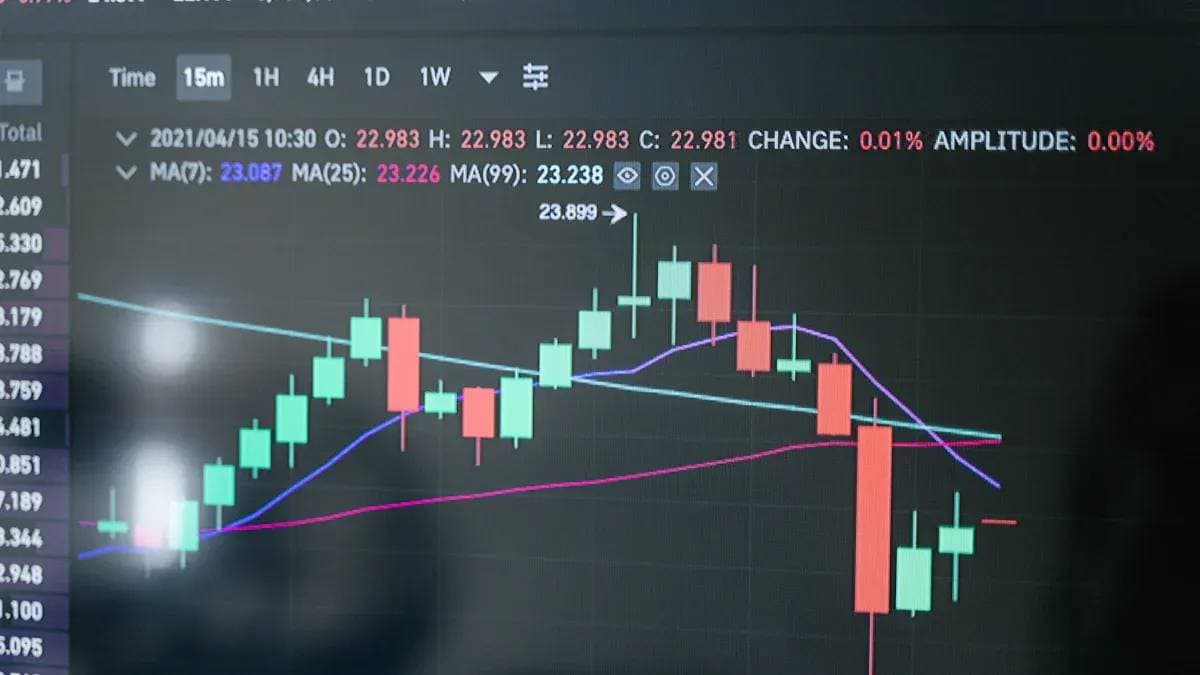
During non-standard trading hours, the number of buyers and sellers participating in the market drops significantly—this is known as “reduced liquidity.” When liquidity is low, you face a direct issue: the bid-ask spread widens significantly.
The spread is the difference between the highest price a buyer is willing to pay and the lowest price a seller is willing to accept. During low-volume periods, this gap becomes wider. This means you will pay a higher price to buy and receive a lower price when selling, effectively increasing your trading costs.
You need to understand that this widened spread does not reflect a change in the stock’s intrinsic value; it is simply a direct consequence of reduced trading activity.
Significantly Increased Price Volatility
Non-standard trading hours react particularly strongly to major news. Many companies, especially tech giants, habitually release quarterly earnings after the market close. Such news can immediately trigger sharp price movements.
- Earnings Releases: When companies like Apple or Tesla release results, the market reacts instantly. Good news can push the stock price up sharply, while disappointing results may trigger massive selling.
- Sector Impact: One company’s news can also affect an entire sector. For example, chip giant Nvidiaearnings sometimes influence the broader market like macroeconomic data.
- Chain Reaction: Illumina once saw its stock drop more than 5% immediately after disappointing earnings, triggering significant declines in related companies over the following week.
During low-volume night sessions, these news-driven price swings are amplified, bringing greater uncertainty.
Information Asymmetry and Decision Risk
In any market, information is power. But during non-standard hours, the risk of information asymmetry is even more pronounced. Institutional investors typically have more professional analysis teams and advanced tools, allowing them to obtain and interpret market information faster than retail investors.
When you see a price moving rapidly after hours, it is very likely that institutional investors have already completed their analysis and decisions. In this environment, you may make wrong judgments due to delayed information, such as chasing highs or panic selling, leading to unnecessary losses.
Currently, you cannot trade US stocks on weekends, but change is coming. With new rules led by 24X Exchange, Saturday US stock market trading is no longer out of reach.
We recommend that you:
- Stay Updated: Check whether your broker plans to support the new service.
- Learn Early: Master risk management tools such as limit orders.
Important Reminder: Always remember that non-standard hours trading involves low liquidity and high volatility risks and is more suitable for experienced investors. Evaluate carefully and do not follow the crowd blindly.
FAQ
Can I trade US stocks on Saturdays now?
No. Currently, all traditional US exchanges, including NYSE and Nasdaq, are closed on weekends and public holidays. Future Saturday trading will require the official launch of new exchanges like 24X Exchange.
Is the new 24/7 trading legal?
Yes, it is completely legal. 24X Exchange has received formal approval from the U.S. Securities and Exchange Commission (SEC) to operate as a national securities exchange. Your trades will be protected by regulation, ensuring compliance and transparency.
What order type should I use for non-standard hours trading?
You should prioritize limit orders.
Limit orders allow you to set the maximum price you are willing to pay when buying or the minimum price you will accept when selling. This effectively helps control trading costs and prevents unexpected losses due to market volatility and widened spreads.
Will all stocks be available for weekend trading in the future?
Probably not. In the early stages, only a portion of highly liquid, large-cap company stocks and major ETFs are expected to be included in 24/7 trading. The specific list of tradable securities will be announced by the exchange and brokers.
*This article is provided for general information purposes and does not constitute legal, tax or other professional advice from BiyaPay or its subsidiaries and its affiliates, and it is not intended as a substitute for obtaining advice from a financial advisor or any other professional.
We make no representations, warranties or warranties, express or implied, as to the accuracy, completeness or timeliness of the contents of this publication.
Related Blogs of
Annual Review: Best Performing US Stock ETFs in 2026 and the Logic Behind Them

Micro Dow, Micro Nasdaq, Micro S&P Futures Comprehensive Comparison – Helping You Find the Best Trading Choice


Focusing on AI and Semiconductors: In-Depth Analysis of 10 Leading Future US Tech Stocks


How to Choose US Major Indices: Pros and Cons Analysis of S&P 500, Dow Jones, and Nasdaq

Choose Country or Region to Read Local Blog
 Australia
 Austria
 Belgium
 Canada
 Cyprus
 Czech Republic
 Denmark
 Estonia
 Finland
 France
 Germany
 Greece
 Hong Kong
 India
India Indonesia
 Ireland
 Italy
Italy Japan
Japan Latvia
 Lithuania
 Luxembourg
 Malaysia
 Malta
Malta Morocco
 Nepal
Nepal Netherlands
 New Zealand
 Norway
 Pakistan
 Philippines
 Poland
 Portugal
 Romania
 Singapore
 Slovakia
 Slovenia
 South Africa
 South Korea
 Spain
Spain Sweden
 Thailand
 The United States
 Turkey
 United Arab Emirates
 United Kingdom
 Vietnam
Contact Us




BIYA GLOBAL LLC is a licensed entity registered with the U.S. Securities and Exchange Commission (SEC No.: 802-127417); a certified member of the Financial Industry Regulatory Authority (FINRA) (Central Registration Depository CRD No.: 325027); regulated by the Financial Industry Regulatory Authority (FINRA) and the U.S. Securities and Exchange Commission (SEC).
BIYA GLOBAL LLC is registered with the Financial Crimes Enforcement Network (FinCEN), an agency under the U.S. Department of the Treasury, as a Money Services Business (MSB), with registration number 31000218637349, and regulated by the Financial Crimes Enforcement Network (FinCEN).
BIYA GLOBAL LIMITED is a registered Financial Service Provider (FSP) in New Zealand, with registration number FSP1007221, and is also a registered member of the Financial Services Complaints Limited (FSCL), an independent dispute resolution scheme in New Zealand.