Micro Dow, Micro Nasdaq, Micro S&P Futures Comprehensive Comparison – Helping You Find the Best Trading Choice



Image Source: unsplash
Traders often face challenges when choosing suitable US stock futures products. This article aims to help traders make informed decisions among Micro Dow (MYM), Micro Nasdaq (MNQ), and Micro S&P (MES) based on their personal trading style, risk preference, and capital situation.
These three have distinct personalities: Micro Nasdaq is the high-return tech pioneer, Micro S&P is the steady market representative, while Micro Dow is the blue-chip cornerstone of the traditional economy.
Understanding their characteristics is the first step to finding the best trading choice.
Key Takeaways
- Micro Nasdaq (MNQ) has the highest volatility, suitable for short-term traders pursuing high returns.
- Micro S&P (MES) has moderate volatility, suitable for swing traders seeking balance.
- Micro Dow (MYM) has the lowest volatility, suitable for conservative traders preferring stability.
- Micro contracts have low margins, lowering the barrier to entry in the futures market.
- When choosing futures products, traders should match their own trading style and risk tolerance.
Three Major US Stock Futures: Core Specifications Comparison

Image Source: pexels
Choosing the right trading instrument first requires understanding its basic “rules of the game.” These three micro US stock futures have significant differences in contract specifications, directly affecting traders’ operations and profit/loss calculations.
Key Trading Specifications
Traders must be familiar with the core parameters of each contract. The table below clearly lists the key trading specifications for Micro Dow (MYM), Micro Nasdaq (MNQ), and Micro S&P (MES).
| Contract Code | Product Name | Value Per Point | Minimum Tick |
|---|---|---|---|
| MYM | Micro E-mini Dow | $0.50 | 1.00 index point |
| MNQ | Micro E-mini Nasdaq-100 | $2.00 | 0.25 index point |
| MES | Micro E-mini S&P 500 | $5.00 | 0.25 index point |
Note: Although MNQ and MES have the same minimum tick size, MES’s value per tick ($1.25) is 2.5 times that of MNQ ($0.50). This means that under the same price fluctuation range, the profit/loss changes in MES contracts will be faster.
Component Stocks and Industry Representativeness
Different indices represent different aspects of the US economy, and their component stock composition determines the “personality” of the futures contracts.
- Micro Dow (MYM): Tracks the Dow Jones Industrial Average. The index includes only 30 large blue-chip companies, such as Boeing, Goldman Sachs, and Home Depot. It more reflects the performance of traditional US industrial and financial sectors.
- Micro S&P (MES): Tracks the S&P 500 Index. The index covers 500 top US listed companies, widely distributed across 11 major industry sectors, accounting for about 80% of the US stock market capitalization. Therefore, it is regarded as the best benchmark for measuring overall US market performance.
- Micro Nasdaq (MNQ): Tracks the Nasdaq-100 Index. The index components are mainly tech and innovation-driven companies, such as Apple, Microsoft, and Amazon. It represents the trends in US high-tech and high-growth sectors, usually with the highest volatility.
Volatility and Risk-Reward Analysis
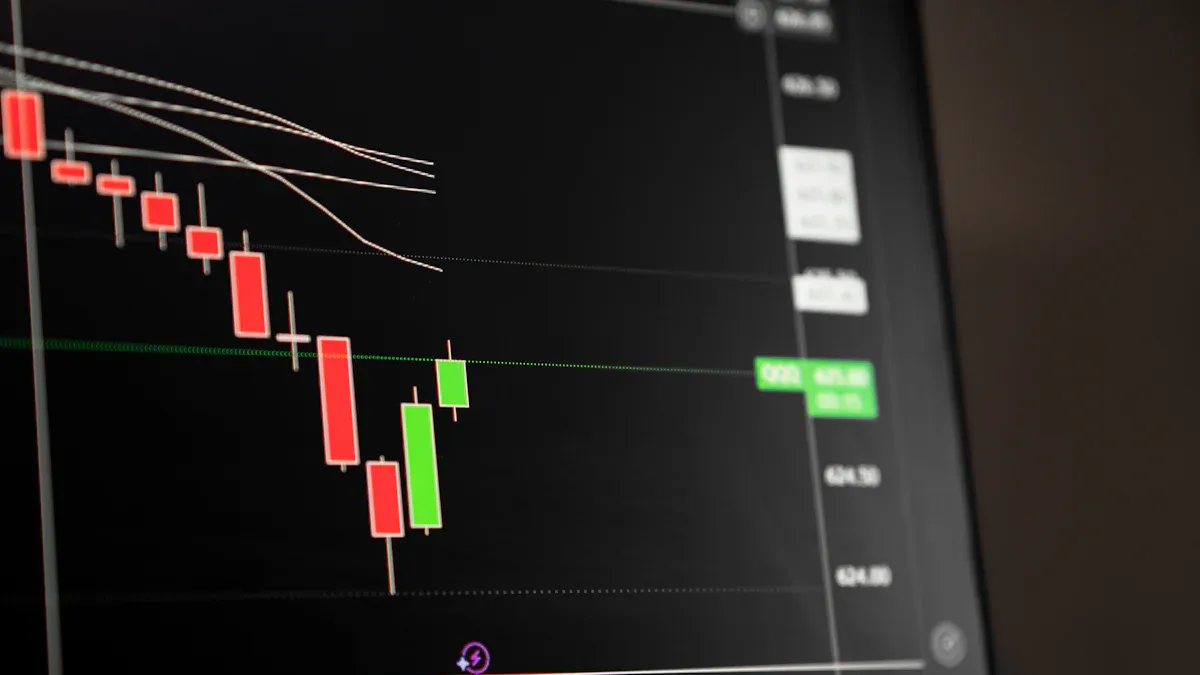
Image Source: pexels
Volatility is the core of trading; it creates opportunities while bringing risks. These three US stock futures have distinctly different volatility characteristics, directly determining the trading strategies and risk profiles they suit.
Micro Nasdaq (MNQ): The Choice for Tech Stock Battlefield
Micro Nasdaq (MNQ) is undoubtedly the “king of volatility” among the three. Due to its components being highly concentrated in tech and high-growth companies, it reacts extremely quickly and intensely to market sentiment, earnings releases, and tech innovation news. This high volatility means huge potential returns, accompanied by extremely high risks. Therefore, MNQ becomes the preferred battlefield for short-term traders and day traders seeking quick profits. They utilize its large intraday price swings to find high-frequency trading opportunities.
Micro S&P (MES): Representative of Broad Market Benchmark
Micro S&P (MES) is in the middle position in volatility, providing a balance of risk and return. It tracks the S&P 500 Index covering broad US market industries; this diversified composition makes its trends smoother than Micro Nasdaq. When tech stocks fluctuate sharply, stable performance in other industries can buffer it. This characteristic gives MES contracts the following advantages:
- Stable Trend Patterns: Its trends are highly correlated with the overall market, with clear trends, suitable for swing trading.
- Ideal Strategy Carrier: Traders often use trend following and breakout strategies, utilizing its high liquidity for smooth entry and exit.
- Suitable for Small Accounts: The micro contract design lowers the capital threshold, allowing small accounts to access the market with controllable risk.
Micro Dow (MYM): Symbol of Stable Blue-Chip Stocks
Micro Dow (MYM) is usually the variety with the lowest volatility among the three. It tracks the Dow Jones Industrial Average consisting of only 30 blue-chip stocks, representing mature US industrial and financial giants. Its unique volatility comes from its price-weighted calculation method.
The Dow Jones Index is price-weighted, meaning high-priced component stocks have far greater influence on the index than low-priced ones. For example, a sharp price fluctuation in a high-priced stock, even if other companies remain stable, can drive the entire index, thereby affecting the value of MYM contracts.
This characteristic makes MYM’s volatility sometimes more “predictable,” attracting conservative trend traders who prefer stability and focus on fundamental analysis.
Trading Costs and Leverage Effect
Trading costs and leverage are key factors determining trading success or failure. Traders must clearly understand the capital threshold and risk exposure before choosing contracts.
Margin Requirements and Capital Threshold
Margin is the deposit traders place to open futures positions. One of the core advantages of micro contracts is their extremely low margin requirements, greatly lowering the barrier to entry in the US stock futures market.
- Micro Contracts: Margins are usually around several hundred dollars. For example, trading one Micro S&P 500 (MES) contract requires a margin of about 1,200 dollars.
- Standard Contracts: Margin requirements are much higher; one standard E-mini S&P 500 (ES) contract may require about 12,000 dollars.
This difference means traders can participate in the market with less initial capital, achieving more flexible position management. For traders needing efficient management and transfer of USD funds to meet margin requirements, consider using regulated financial service tools like Biyapay, which supports exchange and payment in multiple mainstream currencies, facilitating quick transfers to broker accounts.
Contract Value and Leverage Calculation
Contract value (or notional value) represents the total value of the underlying asset controlled by one futures contract. It directly determines the potential profit/loss scale and leverage level of trading.
Calculation Formula:
Contract Value = Current Index Price × Contract Multiplier
For example, assuming the S&P 500 Index current price is 5,000 points. One MES contract (contract multiplier $5) has a contract value of 5,000 × $5 = $25,000. Traders leverage $25,000 worth of assets with only about 1,200 dollars in margin. This is the leverage effect.
The table below shows the multipliers for different contracts, determining their contract values and risk exposure levels at the same index level.
| Contract Code | Contract Multiplier |
|---|---|
| MYM | $0.50 |
| MNQ | $2.00 |
| MES | $5.00 |
Understanding contract value and leverage helps traders more accurately assess the risk of single trades and formulate reasonable capital management strategies.
Trading Style and Best Choice Matching
After understanding the specifications, volatility, and costs of the three major micro US stock futures, the most critical step is to match these characteristics with the trader’s own style. Different traders are like craftsmen using different tools; choosing the most suitable tool can achieve twice the result with half the effort.
Aggressive Short-Term Traders: Prefer Micro Nasdaq
For aggressive traders pursuing high returns, able to bear high risks, and focusing on intraday trading, Micro Nasdaq (MNQ) is the undisputed best choice. Its intense price fluctuations create abundant profit opportunities for short-term operations.
This type of trader usually adopts specific strategies to harness MNQ’s high volatility:
- Intraday Momentum Trading: This strategy aims to capture strong trends formed intraday. For example, when the market shows a clear one-sided trend, traders enter with the trend, utilizing MNQ’s huge volatility to profit in a short time.
- News-Driven Trading: MNQ is extremely sensitive to tech stock earnings, Fed interest rate decisions, or important economic data. Traders can position around these events to capture instantaneous price explosions.
- High-Frequency and Scalping Trading: Utilize MNQ’s tiny price ticks to accumulate profits through a large number of quick open and close operations.
Professional Tip: High leverage is the charm of MNQ trading but also an amplifier of risk. Successful traders must establish a strict risk control system.
Traders need to constantly guard against risk exposure, understanding the real notional value represented by positions. An effective practice is to adjust trading size based on market volatility, actively reducing positions during intense volatility. At the same time, avoid trading multiple highly correlated instruments simultaneously (such as heavy positions in MNQ, MES, and MYM at the same time); this not only fails to diversify risk but multiplies risk exposure.
Steady Swing Traders: Prefer Micro S&P
Steady traders seek balance between risk and return; they prefer holding positions for days or weeks to capture a market trend segment. For this type of swing trader, Micro S&P (MES) is the ideal trading tool. MES represents the broad market, with strong trendiness and relatively steady trends, more suitable for swing operations.
Determining ideal entry and exit points is key to swing trading success. Traders usually combine multiple technical indicators to improve decision accuracy:
- Trend Identification Tools:
- Moving Averages (MA): Use short-term averages (such as 10-day EMA) crossing above long-term averages (such as 50-day SMA) as buy signals, and vice versa as sell signals. Moving averages themselves also form dynamic support and resistance.
- MACD Indicator: In trending markets, MACD can help confirm trend strength and direction.
- Overbought/Oversold and Momentum Tools:
- RSI and Stochastic Oscillator: In ranging markets, these indicators effectively signal overbought or oversold areas, helping traders find the end of pullbacks or range breakouts.
- Fibonacci Retracement: After a clear trend segment, traders can use Fibonacci retracement levels (such as 0.382, 0.5, 0.618) to find optimal entry points after pullback ends.
For traders with a $10,000 USD account, reasonable position management is crucial. Adopting a “percentage of capital” strategy is a good starting point, for example, controlling single-trade risk to 2% of total capital (i.e., $200 USD). This means even if the trade fails, losses are limited to a controllable range. As capital grows, risk amounts adjust accordingly, maintaining consistent risk exposure.
Conservative Trend Traders: Prefer Micro Dow
Conservative traders prioritize capital safety; they prefer lower volatility, more stable instruments, and are willing to forgo some potential high returns for this. Micro Dow (MYM) perfectly meets these needs. MYM tracks the Dow Jones Industrial Average composed of 30 mature blue-chip companies; its trends are usually steadier than the tech-dominated Nasdaq index.
This type of trader focuses more on macroeconomic fundamentals and long-cycle trends. They do not enter and exit frequently but patiently wait for high-certainty trading opportunities.
- Trading Logic: Their decisions are more based on analysis of economic cycles, sector rotation, and company fundamentals. When they judge the overall economy entering an expansion phase, they go long MYM and hold long-term.
- Technical Analysis: Technically, they tend to use large-cycle charts like weekly or monthly to identify major trends, combined with fundamental analysis to confirm entry timing.
- Risk Management: Due to MYM’s lower volatility, traders can set relatively wider stop-loss levels to avoid being “washed out” by normal market pullbacks, thereby better holding positions to capture complete trend moves.
In summary, choosing which US stock futures is essentially choosing a battlefield that matches one’s trading philosophy and risk preference.
The three major micro index futures have no absolute superiority or inferiority; the key is matching. Traders need to combine the characteristics of futures instruments, such as Micro Nasdaq (MNQ)'s high volatility or Micro S&P (MES)'s smooth trends, with personal trading goals and risk tolerance. The essence of choice is finding the tool most suitable for one’s trading system.
Action Suggestion: Beginner traders should start with demo accounts or extremely small positions. Feeling the “personality” of different instruments in real market fluctuations is the best path to avoid common mistakes and ultimately find long-term trading partners.
FAQ
What is the difference between micro contracts and mini contracts?
Micro contracts (such as MES) are one-tenth the size of mini contracts (such as ES). This means trading micro contracts requires less margin and capital, with correspondingly lower risk. It provides traders with finer position management capabilities.
How much starting capital is needed to trade these futures?
There is no fixed standard for starting capital. Traders should prepare enough funds to cover the margin for one contract (usually hundreds to over a thousand dollars) and potential losses. Beginners are recommended to prepare at least several thousand dollars for better risk management.
Can I trade Micro Nasdaq, Micro S&P, and Micro Dow simultaneously?
Technically yes. But traders need to note that these three indices are highly correlated; holding multiple long or short positions simultaneously significantly increases risk exposure rather than diversifying risk. Managing total risk is crucial.
Are these futures contracts traded 24 hours?
They are traded almost 24 hours, from Sunday afternoon to Friday afternoon, with brief daily maintenance breaks. This provides great flexibility for global traders to trade based on market dynamics in different time zones.
*This article is provided for general information purposes and does not constitute legal, tax or other professional advice from BiyaPay or its subsidiaries and its affiliates, and it is not intended as a substitute for obtaining advice from a financial advisor or any other professional.
We make no representations, warranties or warranties, express or implied, as to the accuracy, completeness or timeliness of the contents of this publication.
Related Blogs of

Is the W-8BEN Form Required for Opening a US Stock Account? Understand How to Save on Taxes in One Article


US-China Trade War Enters New Phase: How the Tech Industry Can Respond to Supply Chain Impacts

Focusing on AI and Semiconductors: In-Depth Analysis of 10 Leading Future US Tech Stocks

How to Choose US Major Indices: Pros and Cons Analysis of S&P 500, Dow Jones, and Nasdaq
Choose Country or Region to Read Local Blog
 Australia
 Austria
 Belgium
 Canada
 Cyprus
 Czech Republic
 Denmark
 Estonia
 Finland
 France
 Germany
 Greece
 Hong Kong
 India
India Indonesia
 Ireland
 Italy
Italy Japan
Japan Latvia
 Lithuania
 Luxembourg
 Malaysia
 Malta
Malta Morocco
 Nepal
Nepal Netherlands
 New Zealand
 Norway
 Pakistan
 Philippines
 Poland
 Portugal
 Romania
 Singapore
 Slovakia
 Slovenia
 South Africa
 South Korea
 Spain
Spain Sweden
 Thailand
 The United States
 Turkey
 United Arab Emirates
 United Kingdom
 Vietnam
Contact Us




BIYA GLOBAL LLC is a licensed entity registered with the U.S. Securities and Exchange Commission (SEC No.: 802-127417); a certified member of the Financial Industry Regulatory Authority (FINRA) (Central Registration Depository CRD No.: 325027); regulated by the Financial Industry Regulatory Authority (FINRA) and the U.S. Securities and Exchange Commission (SEC).
BIYA GLOBAL LLC is registered with the Financial Crimes Enforcement Network (FinCEN), an agency under the U.S. Department of the Treasury, as a Money Services Business (MSB), with registration number 31000218637349, and regulated by the Financial Crimes Enforcement Network (FinCEN).
BIYA GLOBAL LIMITED is a registered Financial Service Provider (FSP) in New Zealand, with registration number FSP1007221, and is also a registered member of the Financial Services Complaints Limited (FSCL), an independent dispute resolution scheme in New Zealand.