US Stock Real-Time Quotes Fluctuate Wildly: Is Pre-Market and After-Hours Trading an Opportunity or a Trap?



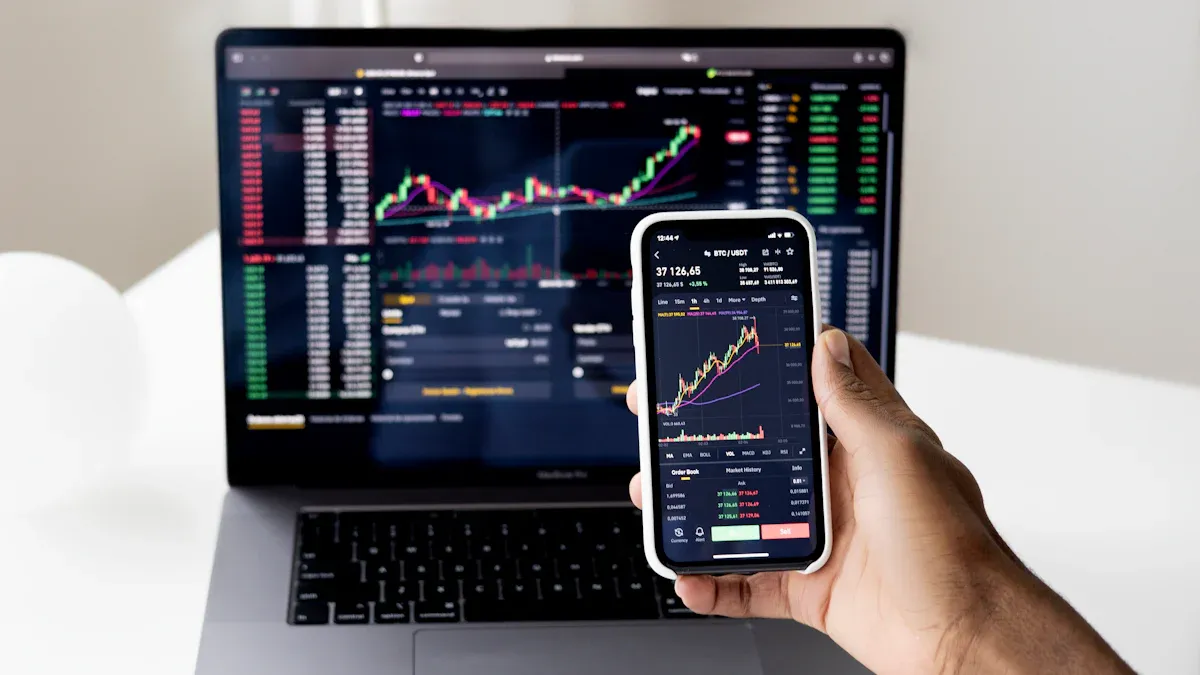
Image Source: pexels
The massive swings in US stock real-time quotes during pre-market and after-hours sessions often leave investors confused.
Is this truly a shortcut to quick profits, or a minefield full of traps?
This article does not simply give a “yes” or “no” answer. It aims to provide a complete analysis framework and practical guide by deeply examining its dual nature. This can help investors determine if this “double-edged sword” is suitable for them and how to use it safely.
Key Points
- Pre-market and after-hours trading in US stocks offers unique opportunities, such as quickly responding to news and flexible trading hours.
- Pre-market and after-hours trading also carries risks, such as low liquidity, wide spreads, and potentially unreliable price movements.
- Investors should assess their own risk tolerance and information access capabilities before deciding whether to participate in pre-market and after-hours trading.
- When participating in pre-market and after-hours trading, start with small positions, strictly enforce stop-losses, and use limit orders.
- Ordinary investors can simply observe pre-market and after-hours quotes and use them as a reference for gauging market sentiment.
Opportunities in Pre-Market and After-Hours Trading
For investors who can handle the volatility, pre-market and after-hours trading provides unique opportunities unmatched by regular trading hours. It expands the boundaries of time, opening new windows for astute market participants.
Reacting Quickly to Major News
Many major news events that impact stock prices are released outside regular trading hours. This creates the most direct value for pre-market and after-hours trading.
For example, if a company announces quarterly earnings far exceeding expectations after the close, investors participating in after-hours trading can buy the stock immediately based on this new information, positioning themselves advantageously before the next day’s open.
Similarly, news about company mergers, management changes, or important macroeconomic data releases can trigger immediate reactions in US stock real-time quotes. Pre-market and after-hours trading is the exclusive channel for capturing these early signals.
Capturing Intense Volatility in US Stock Real-Time Quotes
Fewer participants in pre-market and after-hours sessions mean relatively lower market liquidity. This characteristic makes stock prices more sensitive to buy and sell orders, where even small orders can cause significant price movements. Such intense volatility provides opportunities for short-term traders. They can profit from these price differences through precise judgments. Of course, this also means risks are amplified accordingly.
Flexible Trading Hours
The pre-market and after-hours trading mechanism greatly benefits investors worldwide. It is especially convenient for investors in different time zones, such as Asia, who can trade during their daytime hours.
- Time Zone Advantage: Asian investors no longer need to stay up late monitoring US stock real-time quotes.
- Scheduling Freedom: They can execute trading strategies more flexibly according to their own schedules.
This convenience allows global capital to connect more seamlessly, making the US stock market a truly 24-hour interconnected arena.
Traps in Pre-Market and After-Hours Trading

Image Source: pexels
Although the opportunities are tempting, the other side of pre-market and after-hours trading is filled with traps. Investors who do not understand the inherent risks can easily suffer losses.
Low Liquidity and High Spread Risks
The most prominent feature of pre-market and after-hours sessions is insufficient liquidity. This means far fewer buyers and sellers compared to regular trading hours.
- Sparse Trading Volume: Large institutions like pension funds and mutual funds typically do not participate in pre-market trading. For example, Tesla (TSLA) has massive volume during regular hours, but its average pre-market volume may be only around 2.4 million shares.
- Widened Spreads: The gap between bid and ask prices (the spread) becomes very large. Even for highly liquid stocks like Apple (AAPL), spreads in pre-market and after-hours are wider than in regular sessions, directly increasing investors’ trading costs.
“False Signals” in Price Movements
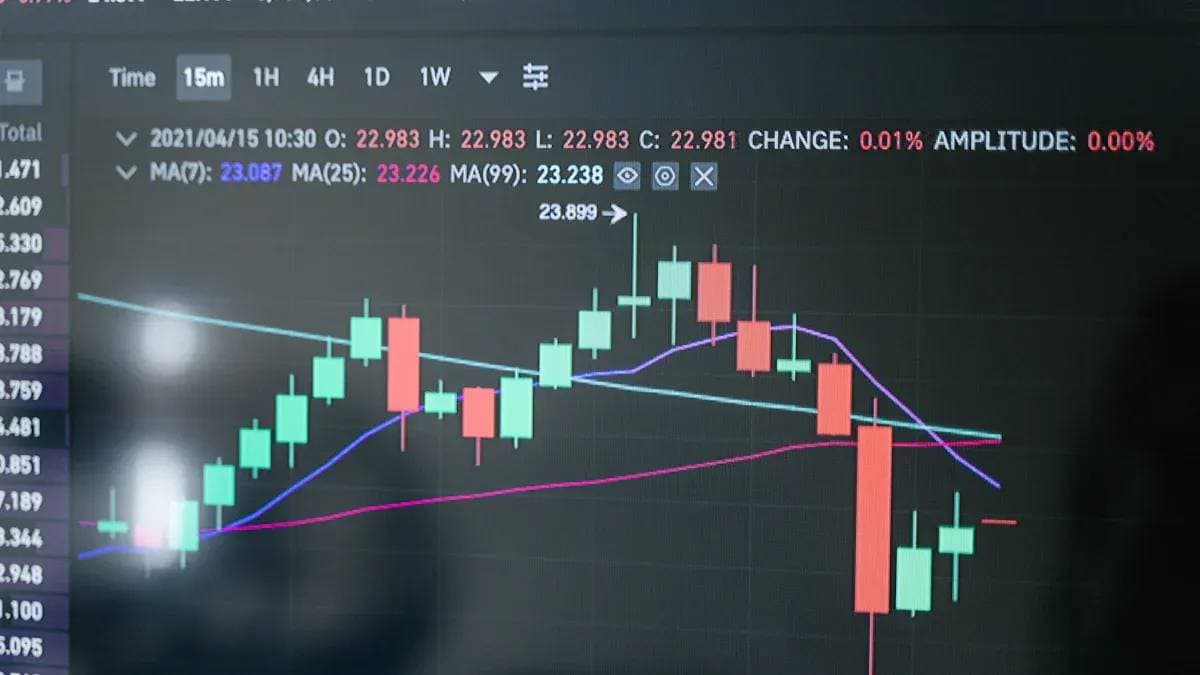
Price movements in pre-market and after-hours can be deceptive. Due to low volume, a few orders can cause intense fluctuations in US stock real-time quotes, but this does not represent the true market trend. Research shows that price movements in pre-market and after-hours often exhibit price reversal phenomena with the next regular session.
A sharp pre-market rise may quickly reverse after the open. Investors chasing highs can easily get trapped. This kind of “false signal” in prices is one of the most common traps for beginners.
Information Asymmetry Between Institutions and Retail Investors
In this “niche market” of pre-market and after-hours, institutional investors have advantages that retail investors cannot match.
- Faster Information Access: Institutional investors often obtain and interpret key information like earnings and news faster than retail investors.
- Superior Resources: They have more advanced trading tools and data analysis systems.
This asymmetry in information and resources puts retail investors at a natural disadvantage in competing with institutions.
Restrictions on Limit Orders
To protect investors from the impact of low liquidity, most brokers and exchanges impose strict rules on pre-market and after-hours trading.
Core Rule: All orders must be limit orders, and market orders are not accepted.
This means investors must specify the highest price they are willing to buy at or the lowest price they are willing to sell at. There are also other restrictions:
- Orders are typically valid only for the current day, and unfilled orders are automatically canceled at the end of the session.
- Modifying an order is treated as canceling and resubmitting, which may cause loss of original queue priority.
These rules provide protection but also limit trading flexibility and execution certainty.
Participation Decision: Is It Suitable for You?
After understanding the opportunities and traps, the next key question turns to the investors themselves. Pre-market and after-hours trading is not suitable for everyone. Before diving in, investors need to conduct an honest self-assessment from the following three dimensions.
Assessing Risk Tolerance
Pre-market and after-hours trading is synonymous with high risk. Investors must evaluate their psychological resilience when facing sharp price swings. In low-liquidity markets, common behavioral biases are amplified.
When asset prices plummet sharply, will investors panic-sell due to loss aversion, or can they remain calm?
Many people easily fall into the trap of overconfidence, believing they can accurately judge the bottom of a stock price. This “catching a falling knife” behavior is considered extremely unwise by professionals. Strong risk tolerance means adhering to established investment principles even during extreme market volatility.
Assessing Information Acquisition and Interpretation Ability
In this time-critical trading session, information is power. Institutional investors typically have resource advantages unattainable by retail investors. Successful participants need the ability to quickly acquire and accurately interpret information. Tools relied on by professional traders usually include:
- Real-time audio and text news services, such as pre-market mover insights from Newsquawk
- AI-curated media monitoring and market summaries
- Instant analyst research reports
If investors cannot access or effectively use this information, it’s like fighting blindfolded on an asymmetric battlefield, with slim chances of success.
Assessing Trading Strategy and Discipline
Emotions are the biggest enemy in trading. The intense volatility of pre-market and after-hours trading easily triggers emotional reactions in investors, such as blindly following the crowd in herd behavior. Therefore, a clear trading strategy and ironclad discipline are crucial.
Investors need to plan clear entry points, exit points, and stop-loss levels in advance. Without strict discipline, traders can easily be disturbed by market “noise,” turning their original investment strategy into chaotic gambling. Only those who can consistently execute their strategies have a chance of surviving in these turbulent waters.
Safe Trading Practical Guide

Image Source: pexels
Even with knowledge of opportunities and traps, jumping directly into pre-market and after-hours trading is like sailing without a map. For investors determined to try, the following four practical strategies are essential tools for ensuring safe navigation. They aim to provide specific, actionable advice to help investors control risks and make wiser decisions.
Strategy One: Small Positions for Probing and Strict Stop-Losses
In low-liquidity markets, risk control is the top priority. Never commit large amounts of capital to pre-market and after-hours trading. The wise approach is to start with small positions.
Core Principle: Treat pre-market and after-hours trading as a “probe” rather than a “decisive battle.”
This strategy effectively reduces the impact of a single failed trade. In practice, investors can refer to the following methods:
- Control Position Size: For high-risk events like earnings, position sizes should be significantly lower than in regular trading, for example, setting them to 25% to 50% of normal positions.
- Split Orders: For larger orders, split them into multiple small orders for phased execution. This helps blend into the market and avoid sharp price impacts from a single large order.
- Set Strict Stop-Losses: Clear stop-loss points must be set upon entry. For example, for a short-term momentum trade, the stop-loss can be placed 2% to 3% below the entry price. Once the price hits the stop-loss, it must be executed without hesitation—this is iron discipline.
Strategy Two: Focus on Familiar Stocks and Earnings Season
Volatility in pre-market and after-hours trading is mainly news-driven, with company earnings being the most typical. Therefore, earnings season is the most active period with the most concentrated opportunities. Instead of chasing all market hotspots, focus energy on a few stocks you have tracked long-term and understand deeply.
Familiarity with a company’s fundamentals, historical price behavior, and market expectations helps investors better judge the authenticity of post-earnings movements in US stock real-time quotes. Here are two common strategies around earnings season:
| Strategy Type | Key Operations |
|---|---|
| Pre-Market Momentum Trading | Monitor price trends 5-10 days before earnings release, looking for strong stocks outperforming the market. Enter before earnings and close most positions before the announcement to lock in profits, leaving a small portion to capture potential surprises. |
| After-Hours Gap Trading | Focus on stocks with large price gaps after earnings (e.g., gaps exceeding 3%). If pre-market volume is high (e.g., over 500,000 shares), it validates market interest. Trade with the momentum while setting stop-loss at 50% of the gap to guard against reversals. |
Strategy Three: Effectively Use Limit Orders to Control Costs
Pre-market and after-hours trading has a golden rule: Only limit orders are allowed. Market orders are prohibited in this low-liquidity environment because they could result in execution at prices far worse than expected, causing massive losses.
Limit orders act like a “price protection”, ensuring investors’ execution prices are no worse than their set levels.
Limit orders allow precise control over trading costs.
- When Buying: Investors set a maximum price they are willing to pay. The order executes only if the market price is at or below this level. This effectively avoids chasing highs during rapid price surges.
- When Selling: Investors set a minimum price they are willing to accept. The order executes only if the market price is at or above this level. This prevents panic selling during sharp drops.
Setting limit orders on trading platforms (such as Webull, Robinhood, etc.) is usually straightforward:
- Select the stock to trade.
- Choose “Limit Order” as the order type.
- Enter your desired buy or sell price.
- Check the option to “Allow trading in extended hours” or similar.
While limit orders provide price protection, they do not guarantee execution. If the market price never reaches the set limit, the order will not fill.
Strategy Four: Use as a Reference Indicator for the Next Day’s Open
For the vast majority of ordinary investors, the safest and most prudent strategy may be: Observe only, do not participate. Treating pre-market and after-hours trading as a “barometer” for market sentiment and a reference for the next day’s opening direction is itself a wise way to avoid risks.
Even without direct trading, monitoring pre-market and after-hours dynamics provides valuable information. Investors can focus on the following indicators:
- Key ETF Movements: Observing ETFs tracking the S&P 500 (such as SPY) in pre-market can roughly gauge overall market opening sentiment—bullish or bearish.
- Price Gap Magnitude: If a stock moves more than ±2% in pre-market, it usually indicates major news driving it, signaling potential strong movement after the open.
- Pre-Market Volume: High volume represents stronger conviction in the price direction. If pre-market volume exceeds 10% of the stock’s 20-day average daily volume, it indicates unusually strong market interest, making the movement more reliable.
Note that pre-market prices are not necessarily the final opening price. Small gaps under 4% are often “filled” (reversed) after the open. Therefore, using pre-market quotes as a reference and combining them with the actual movement in the first 15 minutes after the open is a more prudent approach.
Pre-market and after-hours trading is a double-edged sword, essentially combining high risk with high potential returns. Lower liquidity and higher volatility determine that it is not a game for everyone.
The key to success lies in whether investors possess the corresponding knowledge, discipline, and risk management skills.
For well-prepared investors, it is an effective tool to expand trading strategies. For most ordinary investors, staying on the sidelines or using it only as a market sentiment reference is the safer choice. This itself is a wise way to avoid traps.
FAQ
What Are the Specific Times for Pre-Market and After-Hours Trading?
US stock pre-market and after-hours trading times are based on Eastern Time (ET).
- Pre-Market Trading: Usually from 4:00 AM to 9:30 AM
- After-Hours Trading: Usually from 4:00 PM to 8:00 PM
Note: Specific trading hours may vary slightly by broker; investors should follow their own broker’s rules.
Can All Investors Participate in Pre-Market and After-Hours Trading?
In theory, yes. Most major brokers support this feature. Investors need to confirm if their account has this permission enabled by default or if it requires manual activation. Although available, its high-risk nature makes it more suitable for experienced investors with strong risk tolerance.
Why Can Pre-Market and After-Hours Trading Only Use Limit Orders?
This is a core rule set by exchanges and brokers to protect investors. Liquidity is very low during these sessions, and market orders could lead to execution at prices far worse than expected, causing significant losses. Limit orders lock in the highest buy price or lowest sell price investors are willing to accept, effectively controlling trading costs.
Is the Pre-Market Price the Next Day’s Opening Price?
Not necessarily. Pre-market prices are merely a sentiment indicator before regular trading begins, not the final opening price. When regular trading starts, large numbers of institutional and retail investors enter, forming a new opening price based on real supply and demand, which may differ significantly from pre-market prices.
*This article is provided for general information purposes and does not constitute legal, tax or other professional advice from BiyaPay or its subsidiaries and its affiliates, and it is not intended as a substitute for obtaining advice from a financial advisor or any other professional.
We make no representations, warranties or warranties, express or implied, as to the accuracy, completeness or timeliness of the contents of this publication.
Related Blogs of

Is the W-8BEN Form Required for Opening a US Stock Account? Understand How to Save on Taxes in One Article

Annual Review: Best Performing US Stock ETFs in 2026 and the Logic Behind Them

Micro Dow, Micro Nasdaq, Micro S&P Futures Comprehensive Comparison – Helping You Find the Best Trading Choice


A Blessing for Small Investors: Finding the Lowest Trading Cost US Stock Brokers

Choose Country or Region to Read Local Blog
 Australia
 Austria
 Belgium
 Canada
 Cyprus
 Czech Republic
 Denmark
 Estonia
 Finland
 France
 Germany
 Greece
 Hong Kong
 India
India Indonesia
 Ireland
 Italy
Italy Japan
Japan Latvia
 Lithuania
 Luxembourg
 Malaysia
 Malta
Malta Morocco
 Nepal
Nepal Netherlands
 New Zealand
 Norway
 Pakistan
 Philippines
 Poland
 Portugal
 Romania
 Singapore
 Slovakia
 Slovenia
 South Africa
 South Korea
 Spain
Spain Sweden
 Thailand
 The United States
 Turkey
 United Arab Emirates
 United Kingdom
 Vietnam
Contact Us




BIYA GLOBAL LLC is a licensed entity registered with the U.S. Securities and Exchange Commission (SEC No.: 802-127417); a certified member of the Financial Industry Regulatory Authority (FINRA) (Central Registration Depository CRD No.: 325027); regulated by the Financial Industry Regulatory Authority (FINRA) and the U.S. Securities and Exchange Commission (SEC).
BIYA GLOBAL LLC is registered with the Financial Crimes Enforcement Network (FinCEN), an agency under the U.S. Department of the Treasury, as a Money Services Business (MSB), with registration number 31000218637349, and regulated by the Financial Crimes Enforcement Network (FinCEN).
BIYA GLOBAL LIMITED is a registered Financial Service Provider (FSP) in New Zealand, with registration number FSP1007221, and is also a registered member of the Financial Services Complaints Limited (FSCL), an independent dispute resolution scheme in New Zealand.