Master Opening a US Bank Account and Card: Essential Practical Guide for Beginners



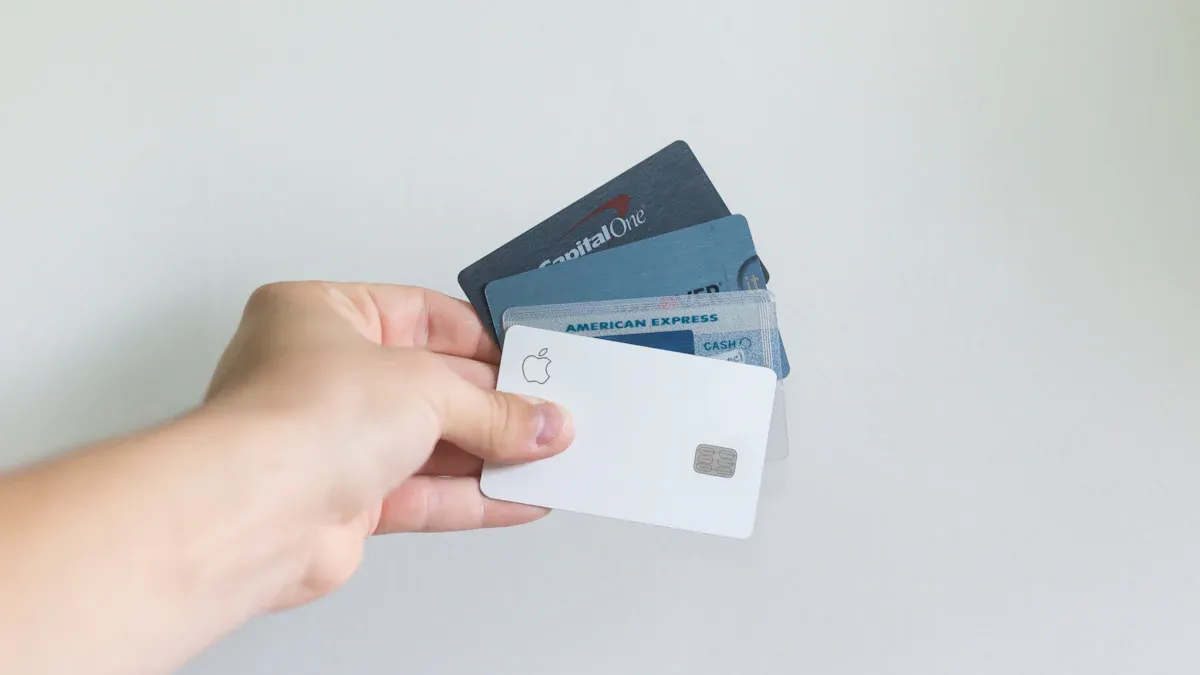
Image Source: unsplash
Arriving in the US for the first time, opening a bank account is your first “mission.” Don’t worry; this US bank account opening guide will be like a patient senior guiding you step by step. The key to success is actually simple—you just need to focus on three things:
Prepare documents fully, choose the right bank, and understand fees.
We will break down every process step by step to eliminate your fear of the unknown. Follow along, and you can easily start your financial life in the US.
Key Takeaways
- To open a bank account in the US, you need to prepare documents, choose the right bank, and understand fees.
- Before opening an account, prepare your passport, US proof of address, and initial deposit; international students also need the I-20 form.
- When choosing a bank, consider traditional large banks with many branches and good service that support opening accounts for international students without SSN.
- After opening an account, manage it well to avoid monthly fees and overdraft fees, and protect your bank card information security.
- Debit cards spend your own money, while credit cards are money borrowed from the bank first; repaying on time builds credit history.
US Bank Account Opening Guide Step One: Prepare Opening Materials
Preparation is half the success. Before going to the bank, you need to organize all required documents. This complete US bank account opening guide material checklist can help you avoid wasted trips. Incomplete documents are the most common reason for opening failures.
General Core Document Checklist
No matter your status, for any mainstream bank transaction, you need to prepare the following core documents. Put them in a folder to ensure nothing is missing.
- Valid Photo ID
- Primary Document: For non-US citizens, your passport is essential; this is the most important identity proof.
- Secondary Document: If you have a US driver’s license or state ID, be sure to bring it. Some banks require two forms of photo ID.
- US Proof of Address Banks need to confirm you have a fixed residential address in the US. The name on this document must match your passport, and the address must be your US residence.
What Proofs of Address Do Banks Accept?
Mainstream banks like Chase and Bank of America usually accept the following:
- Recent utility or internet bills with your name and address.
- Valid lease agreement.
- Recent statements from other banks or credit card companies.
- Social Security Number (SSN) or Individual Taxpayer Identification Number (ITIN)
- SSN: If you work in the US, you will have an SSN. Bring your SSN card or related documents when opening.
- ITIN: If you are not eligible for SSN but need to file taxes, you can apply for an ITIN.
Important Tip: If you just arrived in the US and do not yet have SSN or ITIN, don’t worry. Many banks allow international students and others to open accounts without these numbers.
- Initial Deposit When opening an account, you usually need to deposit money to activate it. There is no strict amount; generally prepare $25 to $100 in cash. Some bank accounts, such as Chase Secure Banking, have no minimum deposit requirement, allowing direct opening.
Special Document Requirements for Different Identities
In addition to the general documents above, banks may require additional materials based on your identity.
International Students (F-1/J-1 Visa)
As an international student, you are a highly welcomed customer group by banks. Many banks provide convenient account opening services for international students without SSN. In addition to general documents, you need to bring:
- I-20 form (F-1 visa) or DS-2019 form (J-1 visa).
- Your student ID.
The table below clearly shows which mainstream banks are friendly to international students without SSN and their usual document requirements:
| Bank Name | Supports Opening Without SSN | General Document Requirements |
|---|---|---|
| Chase | Yes | Passport, visa, I-20/DS-2019, proof of address |
| Bank of America | Yes | Passport, visa, I-20/DS-2019, proof of address, second photo ID (like student ID) |
| Wells Fargo | Yes | Passport, visa, I-20/DS-2019, proof of address, second photo ID |
| Citibank | Yes | Passport, visa, I-20/DS-2019, proof of address |
| PNC Bank | Yes | Passport, visa, I-20/DS-2019, proof of address |
Tourists (B1/B2 Visa)
Opening an account in the US on a tourist visa is more difficult, as most banks require stable US address and longer stay intentions. But it is not impossible. You can try branches in major cities, especially in tourist areas. Bring your passport and B2 visa, and clearly explain your situation to bank staff.
New Immigrants (Green Card Holders)
Congratulations on starting your new life! As a new immigrant, the opening process is relatively straightforward. Documents you need include:
- Government-Issued Photo ID: Your Permanent Resident Card (Green Card) is preferred, or use passport.
- SSN: As a permanent resident, you should already have or soon obtain an SSN.
- US Proof of Address: Such as utility bills or lease.
Non-US Residents (Cross-Border Entrepreneurs)
If you are outside the US but need to open a business bank account for your US company, the process is more complex. You usually need to complete company registration first.
- Company Registration Documents: Such as Certificate of Incorporation.
- Employer Identification Number (EIN): This is the US company’s tax ID, equivalent to a company’s “SSN.” You must apply for EIN for your company before opening a business account.
- Responsible Person Information: Provide personal information and ID proof of main company responsible persons.
Professional Advice: For entrepreneurs in mainland China or elsewhere, remotely opening a US business account may face challenges. You can consider professional agency services to assist with documents and applications.
Step Two: Choose the Right Bank and Account
Image Source: pexels
Documents ready, the next step is choosing the bank and account type best for you. This is the cornerstone of your financial management in the US. Choosing correctly saves fees and even earns rewards. This key step in the US bank account opening guide breaks it down in detail for you.
Savings Account vs. Checking Account
In the US, the two most common personal accounts are checking accounts and savings accounts. You need to understand their uses to better manage funds.
- Checking Account: This is your main daily spending account. It usually comes with a debit card for swiping, ATM withdrawals, and bill payments. This account has almost zero interest; its main function is liquidity.
- Savings Account: This account is mainly for storing idle money to save and earn interest. Its liquidity is lower than checking accounts, not suitable for frequent transactions.
For clearer understanding, here is a comparison table:
| Feature | Checking Account | Savings Account |
|---|---|---|
| Main Use | Daily spending, bill payments, ATM withdrawals, writing checks | Saving, earning interest, emergency funds |
| Interest | Almost no interest | Has interest. Traditional savings average APY about 0.40%, high-yield savings higher. |
| Access Limits | Unlimited, free access anytime | Limited. Though government paused monthly 6-transfer limit, some banks may charge fees for excess, e.g., $10 each time. |
Best Strategy: Combined Use
Strongly recommend opening both a checking and savings account. Keep daily spending money in checking, transfer the rest to savings for interest. This meets daily needs while growing idle funds.
Compare Mainstream Physical Banks
For beginners, choosing a large physical bank with many branches and comprehensive service is usually the safest. Below are the four most mainstream US banks; choose based on their features.
| Comparison Dimension | Chase | Bank of America | Wells Fargo | Citi |
|---|---|---|---|---|
| Opening Bonus | Usually around $300, requires specified direct deposits. | $100 - $500 varying, linked to direct deposit amount. | Generous rewards, sometimes up to $425, usually requiring $1,000 direct deposit. | Usually around $325, requiring $1,500+ direct deposits. |
| Monthly Fee & Waiver | Chase Total Checking monthly fee $12. Waived with $500 monthly direct deposit or $1,500 daily minimum balance. | Advantage Plus Banking monthly fee $12. Waived with $250 monthly direct deposit or $1,500 daily minimum balance. | Everyday Checking monthly fee $10. Waived with $500 monthly direct deposit or $500 daily minimum balance. | Access Account monthly fee $10. Waived with one qualified direct deposit or bill payment monthly. |
| Branch & ATM Coverage | Most branches and ATMs nationwide, widest coverage. | Branches and ATMs second only to Chase, very convenient. | Extensive branch and ATM network nationwide. | Branches mainly in major cities like New York, Los Angeles, Chicago. |
| Beginner/International Student Friendly | Very friendly, supports opening without SSN for international students, student accounts usually no monthly fee. | Very friendly, supports opening without SSN, student accounts no monthly fee. | Friendly to international students, supports opening without SSN, student account discounts. | Friendly to international students, supports opening without SSN, student account discounts. |
Important Tip
Bank opening bonuses and monthly fee policies change frequently. Before deciding, visit the bank website to confirm latest offers and terms. Also, these mainstream banks support Zelle transfer service for convenient free transfers with friends.
Understand Online Banks and Financial Platforms
In addition to traditional banks, some innovative online financial platforms provide more choices, especially for frequent international transfers or simplified opening processes. Take Wise (formerly TransferWise) as example; it offers unique advantages.
- Simple Opening Process: You can complete most applications online, usually needing only valid ID (like passport) and proof of address. For some new arrivals with incomplete documents, this may be a convenient alternative.
- Suitable for Cross-Border Use: Wise’s multi-currency account allows holding and converting over 50 currencies, providing local bank account details for USD, GBP, EUR, etc., convenient for receiving payments worldwide.
- Transparent Low Fees: This is Wise’s biggest highlight. Traditional banks charge high fees for international remittances and add hidden markups to rates.
"Hidden Fees" in Exchange Rate Spreads
Many banks claim “free” or “low commission” international transfers, but they profit by setting a “bank rate” worse than the market real-time rate. This means you unknowingly lose part of funds per transfer. Wise uses real mid-market rate (the rate on Google), charging only a transparent low fee.
Let’s see Wise vs. traditional banks in international remittances through a simple comparison:
| Transfer $1,000 USD from US to Germany | Fee | Rate |
|---|---|---|
| Chase Bank | About $40 online | Bank-set rate with markup |
| Citibank | About $17.50 - $25 | Bank-set rate with markup |
| Wise | Transparent low fee | Real mid-market rate |
In summary, if you need comprehensive service and security from physical banks, Chase and Bank of America are excellent choices. If you have heavy international remittance needs or want lower fees and simpler processes, online platforms like Wise are worth serious consideration.
Step Three: Detailed Online and Offline Opening Processes
You have prepared documents and chosen your preferred bank. Now, enter the practical phase. Opening mainly has two ways: visit branch (offline) or apply via website/App (online). This part of the US bank account opening guide details both processes.
Offline Opening: Branch Handling Steps
For new arrivals, especially international students without SSN, we recommend offline opening first. Face-to-face communication quickly resolves issues with highest success rate.
Senior Advice: Book in Advance
To avoid long waits, strongly suggest booking in advance on the bank website. For Bank of America, just visit its customer service page, find “Schedule an Appointment,” choose service type (like opening checking or savings account), then select convenient time and branch.
Offline process is very clear:
- Go to Branch: Bring all prepared documents.
- Communicate with Banker: Tell staff you, you want to open a checking account and a savings account.
- Review Documents and Fill Forms: Staff will copy your IDs and guide you to fill basic information forms.
- Set Up Account: You will set online banking username/password and deposit initial funds.
- Get Temporary Documents: After success, you get account info and a temporary debit card. Official card arrives at your US address in 1-2 weeks.
Online Opening: Website or App Application Process
If you have SSN and complete documents, online application is very convenient. You can complete everything at home, saving time and effort. But online processes have requirements for document standardization and network environment.
The core of online application is identity verification. Automated systems usually complete in minutes. But if submitted materials have issues or need manual review, it may take hours or workdays.
Common Reasons for Online Application Failures
- Poor Document Quality: Uploaded ID photos blurry, reflective, or cropped.
- Mismatched Information: Filled name (using nickname instead of passport legal name) or address inconsistent with documents.
- Network Issues: Unstable connection or browser plugins/VPN interfering with verification.
- Facial Recognition Failure: Dim lighting, face obstructed, or cluttered background during verification.
Ensure good network and lighting, carefully check all information to greatly improve online opening success rate.
Step Four: Post-Opening Account Management and Security
Image Source: unsplash
Congratulations, your account is open! Now, learn to manage it smartly, avoid unnecessary expenses, and protect fund security. This is like driving a new car—understanding the dashboard and safety features is crucial.
Common Bank Fees and Avoidance Methods
Some bank services charge fees, but you can completely avoid them. Understanding these rules saves money.
- Monthly Maintenance Fee This is the most common; most banks charge
$10to$15monthly for checking accounts.How to Avoid?
- Maintain Minimum Balance: Many banks waive monthly fees if daily minimum balance is
$500or$1,500+. - Set Up Direct Deposit: Monthly qualified deposit (usually
$250+) from employer or government waives fees. - Student Status: If under 25 and student, most banks waive monthly fees.
- Maintain Minimum Balance: Many banks waive monthly fees if daily minimum balance is
- Overdraft Fee If insufficient funds for a transaction, banks may cover and charge overdraft fee. Good news: Many banks are optimizing. For example, Bank of America reduced overdraft fee from
$35to$10, while Wells Fargo offers 24-hour grace period to cover. - Non-Network ATM Fee Using non-bank ATMs may incur fees from both your bank and ATM owner. Total can reach
$4.86. Mainstream banks like Chase and Bank of America usually charge$2.50for non-network withdrawals.
Account and Bank Card Security Essentials
Protecting your account information and funds is your responsibility. Be sure to do the following:
- Set Security Alerts: Log into bank App or online banking, enable two-factor authentication in “Security Center.” Also set SMS/email alerts for large transactions, login attempts, and balance changes.
- Beware Phishing Scams: Scammers impersonate banks via email or SMS to trick you into clicking suspicious links or providing personal information.
Security Rule: Banks and legitimate institutions never ask for account password, full SSN, or card CVV via phone or email. For suspicious requests, hang up or delete directly.
- What if Bank Card Lost or Stolen? If lost, act immediately. Lock the card via bank App or website first, then call customer service to report loss.
Timely reporting maximizes fund protection from loss.Bank Report Loss Phone Chase 1-800-935-9935 Wells Fargo 1-800-869-3557
Review this US bank account opening guide; you have mastered the three core steps: prepare documents, choose bank, handle opening. The process is not complex; key is advance preparation.
As long as prepared, fastest same day activation possible, with card arriving in about 7 to 10 business days.
See, opening a bank account in the US is much simpler than imagined. Wish your financial life in the US starts smoothly from here!
FAQ
We compiled some questions you care most about before and after opening. Hope these short answers clear your final doubts.
What is the difference between debit card and credit card?
Debit card directly uses money in your checking account—spending your own deposits. Credit card is bank lending you money first; you repay by due date. Simply, one spends your money, the other spends first and repays later.
After opening a bank account, how to build credit history?
Building good credit history is crucial for life in the US. You can apply for a secured credit card. Repaying on time is the most effective way to build credit.
Is money in US banks safe?
Very safe. Most US banks are insured by the Federal Deposit Insurance Corporation (FDIC). Your deposit accounts (like checking and savings) have up to $250,000 insurance, providing solid fund protection.
If I leave the US, can I close the account from mainland China?
Possible, but process may be complex. Contact bank in advance for remote closure procedures. Some banks may require mailing notarized written application, so best handle account matters before leaving the US.
*This article is provided for general information purposes and does not constitute legal, tax or other professional advice from BiyaPay or its subsidiaries and its affiliates, and it is not intended as a substitute for obtaining advice from a financial advisor or any other professional.
We make no representations, warranties or warranties, express or implied, as to the accuracy, completeness or timeliness of the contents of this publication.
Related Blogs of

It's Finally Here: Mainland China Users Can Now Register Wise with ID Card Only


PayPal Payment Process Tutorial: All Fees Explained Clearly


Wise Account Registration and Activation Guide: Easily Handle Cross-Border Collections and Remittances


How Mainland Chinese Can Apply for a Hong Kong Bank Card: In-Depth Analysis of HSBC and BOC Hong Kong Account Opening Requirements

Choose Country or Region to Read Local Blog
 Australia
 Austria
 Belgium
 Canada
 Cyprus
 Czech Republic
 Denmark
 Estonia
 Finland
 France
 Germany
 Greece
 Hong Kong
 India
India Indonesia
 Ireland
 Italy
Italy Japan
Japan Latvia
 Lithuania
 Luxembourg
 Malaysia
 Malta
Malta Morocco
 Nepal
Nepal Netherlands
 New Zealand
 Norway
 Pakistan
 Philippines
 Poland
 Portugal
 Romania
 Singapore
 Slovakia
 Slovenia
 South Africa
 South Korea
 Spain
Spain Sweden
 Thailand
 The United States
 Turkey
 United Arab Emirates
 United Kingdom
 Vietnam
Contact Us




BIYA GLOBAL LLC is a licensed entity registered with the U.S. Securities and Exchange Commission (SEC No.: 802-127417); a certified member of the Financial Industry Regulatory Authority (FINRA) (Central Registration Depository CRD No.: 325027); regulated by the Financial Industry Regulatory Authority (FINRA) and the U.S. Securities and Exchange Commission (SEC).
BIYA GLOBAL LLC is registered with the Financial Crimes Enforcement Network (FinCEN), an agency under the U.S. Department of the Treasury, as a Money Services Business (MSB), with registration number 31000218637349, and regulated by the Financial Crimes Enforcement Network (FinCEN).
BIYA GLOBAL LIMITED is a registered Financial Service Provider (FSP) in New Zealand, with registration number FSP1007221, and is also a registered member of the Financial Services Complaints Limited (FSCL), an independent dispute resolution scheme in New Zealand.