Wise Card Application Tutorial: How to Apply for and Use Wise Card in China in 2025



Image Source: unsplash
You may wonder what a Wise card is and whether mainland China residents can apply for it. The direct answer is that currently, you cannot apply for a Wise physical card or virtual card using a Chinese ID and mainland address.
However, you still have a chance to successfully apply. The key is that you can provide valid address proof from specific countries or regions. You will learn a detailed application process and usage guide to solve the address proof challenge and smoothly obtain a Wise card.
Tip: Wise currently supports issuing cards to residents in the UK, US, Japan, Canada, and the European Economic Area (EEA), etc.. Having address proof from these regions is the first step to applying.
Key Points
- Chinese residents cannot directly apply for a Wise card and need to provide overseas address proof.
- The Wise card is a multi-currency debit card supporting global spending and ATM withdrawals.
- Wise uses real exchange rates with transparent fees, more cost-effective than traditional banks.
- Applying for a Wise card requires registering an account, filling in overseas address, completing identity verification, and paying the card issuance fee.
- The Wise card can be linked to WeChat Pay, convenient for use in mainland China.
What is a Wise Card
Image Source: unsplash
Before diving into the application steps, you first need to clearly understand what a Wise card is. Simply put, it is not a credit card but a debit card linked to your Wise multi-currency account. This means you can only spend funds already in the account and cannot overdraw.
Core Definition of Wise Card: Multi-Currency Debit Card
You can think of a Wise account as a powerful digital wallet. Once you have it, you can apply for a Wise card for global spending. The core functions of this card include:
- Online or offline spending in over 160 countries and regions worldwide.
- Holding and managing over 40 different currencies in your account.
- When spending, the card automatically deducts from your corresponding currency balance.
- If there is no corresponding currency balance, Wise automatically converts at the lowest fee and mid-market rate.
Important Note: The Wise card is currently mainly open to residents in the UK, US, Japan, Canada, Australia, and the European Economic Area (EEA), etc. This is why you need address proof from a supported region.
Advantages of Wise: Low Fees and Real Exchange Rates
Wise’s biggest attraction lies in its transparent and low fee structure. Unlike traditional banks or currency exchange services, Wise uses the mid-market exchange rate for conversions.
This rate is the “real” exchange rate used in interbank transactions, without hidden markups. When exchanging at airports or exchange points, their “tourist rates” usually include profits and operating costs, making you pay more. Wise saves you this unnecessary expense by providing real rates.
Difference Between Wise Physical Card and Virtual Card
After successful application, you can get a physical card and virtual card. Understanding what a Wise card is also requires knowing their differences to choose based on needs.
| Feature | Wise Physical Card | Wise Virtual Card |
|---|---|---|
| Online Shopping | Supported | Supported |
| Physical Store Payment | Supports swiping or inserting card | Supports contactless payment via mobile wallet (e.g., Apple Pay) |
| ATM Withdrawal | Supported | Not supported |
| Security | Need to report loss and reissue if lost | Can freeze or delete anytime, higher security |
Please note that in most regions, you must first order a physical card before immediately generating and using a virtual card in the Wise App.
Wise is a Financial Company, Not a Bank
Finally, it needs to be clear that Wise is a strictly regulated fintech company, but it is not a bank. This means your funds are safely held in “asset segregation,” but not protected by traditional bank deposit insurance (such as US FDIC).
Wise holds compliance licenses in multiple major global markets and is regulated:
- UK: Regulated by the Financial Conduct Authority (FCA).
- US: Registered with the Financial Crimes Enforcement Network (FinCEN) and supervised by state regulators.
- EU: Regulated by the National Bank of Belgium (NBB).
Understanding what a Wise card is and the nature of the company behind it helps you use this financial tool more safely and confidently.
Complete Wise Card Application Process Guide
Now that you understand what a Wise card is, we move to the most core part: applying for your own Wise card. The entire process can be broken down into several clear steps. As long as you prepare well, it is not complicated. Remember, success depends entirely on whether you can provide compliant overseas address proof.
Core Preparation: Obtaining Overseas Address Proof
This is the most challenging step in the entire application process. Since Wise does not mail cards to mainland China addresses, you need to provide a valid address from a supported country or region. This address will be used to receive the physical card and, more importantly, you need to provide corresponding address proof documents to pass Wise’s review.
Wise officially recognized address proof documents usually include the following categories:
- Utility Bills: Water, electricity, gas, or fixed phone bills from the last 3 months.
- Financial Institution Letters: Bank or credit card statements from the last 3 months. These can come from traditional banks or digital banks like N26, Monzo.
- Government-Issued Documents: Council tax bills from the last 12 months, vehicle registration documents, or other official letters from government agencies.
- Address-Containing ID: Valid driver’s license issued in certain countries or regions containing full residential address.
- Lease Agreement: Formal rental contract still in effect.
How to Legally Obtain Address Proof? If you have friends or family overseas, consider using their address and ask them to provide a bill with your name and that address (e.g., adding your name to utility accounts). Another popular method is applying for overseas digital bank accounts with relatively lenient address verification (like N26, Revolut) and using their bank statements as your Wise address proof.
Step One: Register and Verify Wise Account
After preparing address proof, you can start registering a Wise account.
- Visit Official Website or App: Start registration via Wise official website or mobile app. Click “Register” button.
- Provide Basic Information: Enter your email address. You can also quickly register using Google, Facebook, or Apple account.
- Choose Account Type: Usually select “Personal account.”
- Choose Residential Country: At this step, select the country or region with your address proof (e.g., UK, Japan, Singapore, etc.), not China.
Tip: Recommend using international email like Gmail or Outlook for registration. During registration and subsequent operations, ensure your network environment matches the selected country or region to avoid triggering risk controls.
Step Two: Fill Personal Information and Address
The registration process will guide you to fill detailed personal information. Accurately enter your name, date of birth, and contact phone.
The most critical step is filling your residential address. The address filled here must completely match your prepared overseas address proof document, accurate to house number and postal code. Wise strictly checks address information; any mismatch may lead to application failure.
Step Three: Complete Identity Verification (KYC)
To comply with global financial regulations, Wise must verify your real identity, a process called KYC (Know Your Customer).
Even using overseas address registration, you can still use your Chinese passport for identity verification. Wise usually accepts the following identity documents:
- Passport (photo page only)
- National ID card (front and back needed)
- Driver’s license (front and back needed)
The system will guide you to take clear photos of documents using mobile camera and may require a selfie for facial comparison. Ensure shooting in well-lit environment with all information clearly readable.
Step Four: Pay Card Issuance Fee and Order
After identity verification and address information review pass, you can order the physical card in the Wise App.
You need to pay a one-time card issuance fee. This fee varies by country or region selected during application, usually about $7 USD. You can pay this fee using credit card or other Wise-supported methods.
After payment, you successfully order the Wise physical card. Wise will mail the card to your filled overseas address. Good news: In most regions, once you order the physical card, you can immediately generate and use a virtual card in the App without waiting for physical card arrival.
Wise Card Activation and Usage Tutorial
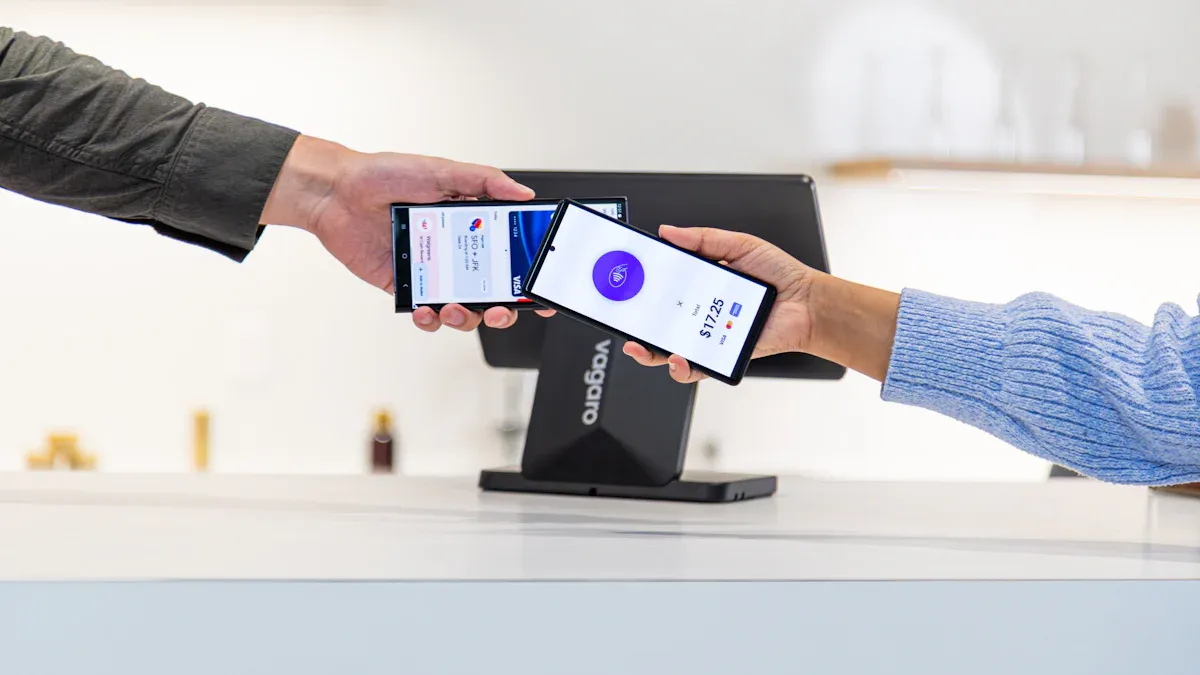
Image Source: unsplash
Congratulations! If you have reached this step, you are just a few steps away from successfully using a Wise card. After receiving the card, you need to activate it first before topping up the account and spending. This section provides clear operation guidance.
Activating Wise Physical Card and Virtual Card
The activation process is divided into two parts, with slightly different operations for virtual and physical cards.
- Virtual Card Activation: Good news: In most regions, after ordering the physical card, you can immediately generate a virtual card in the Wise App. This virtual card is usually instantly activated, and you can immediately use it for online payments or add to mobile wallets like Apple Pay.
- Physical Card Activation: Your physical card requires an offline operation to complete activation. Activation methods vary by region.
Core Activation Steps
- Preferred: Chip and PIN Transaction. For most regions (excluding US and Japan), the simplest way to activate is a chip transaction requiring PIN input. Go to a supermarket or any store supporting card swiping, use chip insertion, and enter your 4-digit PIN to complete a payment.
- Alternative: ATM Operation. If first chip transaction fails or you want a more direct way, go to any ATM supporting Visa or Mastercard. Perform a cash withdrawal or balance inquiry to successfully activate the card.
- In Canada or Singapore, if withdrawal fails, balance inquiry also works.
- In US or Japan, you may need to first enter the 6-digit code sent with the card in the Wise App, then perform a chip and PIN transaction to activate contactless payment.
Wise Account Top-Up and Funding
Your Wise card is a debit card; ensure sufficient funds in corresponding currency balance before spending. There are multiple ways to top up (or “fund”) a Wise account.
You can directly operate via Wise App or website:
- Log into your Wise account, select the currency balance you want to top up on the homepage (e.g., USD).
- Click “Add” button.
- Enter the amount you wish to top up, then choose payment method.
Common top-up methods include:
| Top-Up Method | Features | Applicable Scenarios |
|---|---|---|
| Bank Card | Supports debit and credit cards, simplest operation, usually instant arrival, but relatively higher fees. | Suitable for small, urgent top-up needs. |
| Bank Transfer | Transfer from your external bank account to Wise-provided dedicated account details (e.g., USD ACH routing number). Lower fees, but arrival takes 1-3 business days. | Suitable for large, non-urgent fund transfers. For example, initiate transfer from your licensed Hong Kong bank account to Wise USD account. |
| Third-Party Platforms | Some users also use third-party digital currency services like Biyapay to first convert held digital assets to fiat, then transfer to Wise account. | Provides an additional funding channel for digital asset managers. |
Important Tip: Using credit card top-up may be treated as “cash advance” by your issuing bank, incurring additional interest and fees. Recommend prioritizing debit card or bank transfer.
Online and Offline Spending Domestically and Abroad
After successful top-up, you can use the Wise card globally.
- Online Spending: Your Wise physical and virtual cards can be used on major global e-commerce sites, such as Amazon US shopping, subscribing to Netflix, or topping up US Apple ID. During payment, it works like any ordinary Visa or Mastercard.
- Offline Spending Abroad: When traveling overseas, Wise card is an excellent payment tool. Swipe at restaurants, hotels, stores, and any POS supporting Visa or Mastercard.
- Spending in Mainland China: Using Wise card in mainland China has special scenarios.
- Link Mobile Payment: The best way to increase Wise card usage rate in mainland China is linking to WeChat Pay. After linking, scan to pay at millions of merchants supporting WeChat Pay, very convenient.
- Open WeChat, go to “Me” > “Services.”
- Click “Wallet,” then select “Bank Cards.”
- Click “Add Bank Card,” and enter your Wise card information as prompted.
- Physical POS Swiping: Directly swiping Wise physical card at mainland China POS has unstable success rate. Usually higher acceptance at international venues.
- Usually Accepted: International chain hotels, tourist attractions.
- Sometimes Accepted: Large chain convenience stores, cafes, some restaurants.
- Rarely Accepted: Taxis, small shops, markets.
- Link Mobile Payment: The best way to increase Wise card usage rate in mainland China is linking to WeChat Pay. After linking, scan to pay at millions of merchants supporting WeChat Pay, very convenient.
Global ATM Withdrawal Practice
When needing local cash, use Wise physical card at global ATMs supporting Visa or Mastercard to directly withdraw foreign currency.
Operation is simple, like any bank card: Insert card, enter PIN, select withdrawal amount. But understand related fee structure.
Withdrawal Fee Composition
Wise withdrawal fees consist of two parts, with certain free quotas monthly.
- Free Quota: Each calendar month, enjoy 2 free withdrawal opportunities, total amount not exceeding specific quota (e.g., $100 USD).
- Fees After Exceeding Quota:
- Fixed Fee: From the third withdrawal monthly, each incurs a fixed fee (e.g., $0.50 USD).
- Variable Fee: When monthly withdrawal total exceeds free quota, excess part charged at certain percentage (e.g., 1.75%).
Note: Besides Wise fees, the ATM owner bank may charge an additional “service fee” or “surcharge.” This fee displays on ATM screen before confirmation. To save fees, recommend using large bank ATMs and withdrawing needed amount at once to reduce times.
Wise Card Fees, Limits, and Risk Controls
After understanding how to use Wise card, familiarize with its fees, limits, and security rules. Clearly mastering this information helps better manage funds and avoid unnecessary issues.
Main Fee Composition of Wise Card
Wise is known for transparent fees. It promises no hidden fees; you only pay for used services.
Wise uses mid-market exchange rate, no hidden markup in rate. This means fairer prices for currency conversions.
Following are main fees you may encounter using Wise card:
- Card Issuance Fee: One-time fee for applying physical card, usually $9 USD.
- Holding Funds: Holding over 40 currencies in Wise account is free, no monthly or management fees.
- Card Spending: When spending with existing currency balance, no fees.
- Currency Conversion Fee: If spending currency balance insufficient, Wise auto-converts. This incurs conversion fee starting from 0.57%, depending on currency type.
- ATM Withdrawal Fee: Monthly 2 free withdrawals within $100 USD total. After exceeding, each incurs $1.50 USD fixed fee plus 2% variable on excess.
Detailed Spending and Withdrawal Limits
For fund security, Wise sets spending and withdrawal limits on your card. These limits are default and maximum; you can adjust in Wise App.
Following are common spending limits for Wise cards issued in US region:
| Payment Type | Default Daily Limit | Maximum Daily Limit |
|---|---|---|
| Chip and PIN Payment | $1,000 USD | $2,000 USD |
| Online Payment | $1,000 USD | $2,000 USD |
Tip: These limits reset daily. If large payment needed, raise limit in App in advance.
Account Risk Controls and Security Notes
Wise highly values account security, providing multiple protection measures. You also need to know behaviors that may trigger account risk review.
Security Features Provided by Wise:
- Two-Step Verification Login: Each login, besides password, requires verification code sent to phone, greatly enhancing account security.
- Instant Transaction Notifications: Wise immediately sends notifications for every card transaction, helping detect suspicious activity first time.
Behaviors to Avoid: To ensure normal account use, strictly comply with Wise’s Acceptable Use Policy. Following activities are strictly prohibited and may lead to account review or closure:
- Any form of cryptocurrency transactions.
- Purchasing or paying for illegal goods or services.
- Paying for strictly regulated items, such as weapons.
Always use your Wise account compliantly for best fund security and long-term use.
Now you understand the complete process to obtain a Wise card. The key to the entire process is providing compliant overseas address proof. For friends with cross-border payment, online shopping abroad, and outbound travel needs, it is undoubtedly a powerful financial tool.
Final Tip: Wise policies constantly update. Before operating, visit its official terms and conditions page, note “last updated time,” etc., to ensure latest regulations. Always prioritize fund security.
FAQ
What if my Wise card application is rejected?
Rejection usually due to address proof documents not meeting requirements. Carefully check if documents are clear, complete, and comply with Wise rules. Prepare new documents and contact customer service or resubmit.
Can Wise physical card be mailed to mainland China?
No. Wise currently does not mail cards to mainland China addresses. You must provide a valid address from a supported country or region to receive the physical card. This is a prerequisite for successful application.
How long after applying to receive Wise physical card?
Delivery time depends on selected country or region during application. Usually 1 week to Europe, 2-3 weeks to US or Asia. Track mailing status in Wise App.
Is using a friend’s overseas address safe for application?
This is a feasible workaround, but ensure full consent from friend. All account responsibility is yours. Ensure you can receive card and possible letters at this address, and comply with Wise user agreement.
*This article is provided for general information purposes and does not constitute legal, tax or other professional advice from BiyaPay or its subsidiaries and its affiliates, and it is not intended as a substitute for obtaining advice from a financial advisor or any other professional.
We make no representations, warranties or warranties, express or implied, as to the accuracy, completeness or timeliness of the contents of this publication.
Related Blogs of
What Is Zelle? 2025 Latest Zelle Transfer Guide: Registration, Usage, and Security Full Strategy

Avoid These Pitfalls: Tips for Successfully Registering and Using a U.S. PayPal Account

Beginner's Guide to US Individual Income Tax Rates: Understanding Minimum Filing Income Requirements

How Mainland Chinese Can Apply for a Hong Kong Bank Card: In-Depth Analysis of HSBC and BOC Hong Kong Account Opening Requirements

Choose Country or Region to Read Local Blog
 Australia
 Austria
 Belgium
 Canada
 Cyprus
 Czech Republic
 Denmark
 Estonia
 Finland
 France
 Germany
 Greece
 Hong Kong
 India
India Indonesia
 Ireland
 Italy
Italy Japan
Japan Latvia
 Lithuania
 Luxembourg
 Malaysia
 Malta
Malta Morocco
 Nepal
Nepal Netherlands
 New Zealand
 Norway
 Pakistan
 Philippines
 Poland
 Portugal
 Romania
 Singapore
 Slovakia
 Slovenia
 South Africa
 South Korea
 Spain
Spain Sweden
 Thailand
 The United States
 Turkey
 United Arab Emirates
 United Kingdom
 Vietnam
Contact Us




BIYA GLOBAL LLC is a licensed entity registered with the U.S. Securities and Exchange Commission (SEC No.: 802-127417); a certified member of the Financial Industry Regulatory Authority (FINRA) (Central Registration Depository CRD No.: 325027); regulated by the Financial Industry Regulatory Authority (FINRA) and the U.S. Securities and Exchange Commission (SEC).
BIYA GLOBAL LLC is registered with the Financial Crimes Enforcement Network (FinCEN), an agency under the U.S. Department of the Treasury, as a Money Services Business (MSB), with registration number 31000218637349, and regulated by the Financial Crimes Enforcement Network (FinCEN).
BIYA GLOBAL LIMITED is a registered Financial Service Provider (FSP) in New Zealand, with registration number FSP1007221, and is also a registered member of the Financial Services Complaints Limited (FSCL), an independent dispute resolution scheme in New Zealand.