US Stock News Flash: What Is the Best Trading Strategy in the Current Market Volatility




Image Source: unsplash
Facing the frequent market volatility highlighted in current US stock news, a single strategy is difficult to cope with all situations. Successful investors usually build a balanced “strategy toolbox” that combines offense and defense. This approach is not about going all-in but emphasizes flexibility and adaptability.
Investors are actively adjusting strategies to cope with market changes. Data shows that many are changing their portfolio management methods.
- Nearly 78% of retail investors adjust their positions based on breaking news.
- About 67% of investors use dollar-cost averaging to smooth the impact of market volatility.
- Approximately 30% of investors choose to exit positions during sharp market declines.
This article aims to provide a clear framework. It helps investors build a personalized trading strategy combination based on their own risk tolerance and investment goals.
Key Points
- Market volatility is normal, and investors need multiple strategies to cope.
- Understanding inflation, interest rates, and tech stock valuations is key to grasping market volatility.
- Diversification, selecting quality stocks, and dividend stocks can help protect investments.
- Using options hedging and setting stop-losses can manage investment risks.
- Buying during market panic or following trends can find opportunities in volatility.
Roots of Market Volatility: Interpretation of Latest US Stock News

Image Source: unsplash
To develop effective trading strategies, one must first understand the roots of current market volatility. Recent US stock news reveals several core driving factors, mainly focused on macroeconomics, policy directions, and specific industry risks.
Macroeconomics: Inflation, Interest Rates, and Recession Concerns
Inflation data is key to influencing market sentiment. Although it has eased, long-term inflation expectations remain.
These data indicate that the market believes inflation pressures will persist. At the same time, concerns about economic recession have not completely dissipated. Although predictions from different models vary, the risk remains a focus for investors.
According to multiple economic reports, the consensus probability of a U.S. economic recession in the next 12 months is approximately 24% to 30%. Notably, some models have predicted “three out of zero past recessions,” showing the unreliability of predictions.
Policy Directions: The Fed’s Rate Path
The Federal Reserve’s interest rate decisions are the most watched topic in current US stock news. There is clear divergence within the Federal Open Market Committee (FOMC).
- Some members: Resist rate cuts because inflation remains above the 2% target.
- Other members: Support rate cuts due to signs of cooling in the labor market.
This divergence has put financial markets into a “wait-and-see” mode. The market generally expects a mild rate cut but is also prepared for a “hawkish rate cut”. In this scenario, the Fed may cut rates but limit future easing expectations, thereby triggering market volatility.
Industry Risks: Vulnerability of Tech Giants
Tech stocks have always been an important engine of the market, but their high valuations also bring risks. Currently, the average price-to-earnings ratio (P/E) of the tech industry is 31.9, while the S&P 500 information technology sector has an even higher valuation.
As shown in the table below, the sector’s current P/E ratio (40.35) is far above its historical average over many years, which is widely considered “expensive” in US stock news analysis.
| Time Period | Average P/E Ratio (μ) | Deviation from Current P/E (40.35) | Valuation |
|---|---|---|---|
| Past 1 Year | 36.71 | +3.01 σ | Expensive |
| Past 5 Years | 31.12 | +2.40 σ | Expensive |
| Past 10 Years | 24.51 | +2.64 σ | Expensive |
| Past 15 Years | 20.33 | +3.18 σ | Expensive |
This high valuation makes tech stocks particularly vulnerable in environments of rising interest rates or earnings missing expectations.
Defensive Strategies: Building a Solid Portfolio
After understanding the roots of market volatility, investors can begin building defensive strategies. A solid portfolio can help withstand downside risks and safeguard long-term investment goals. Defense does not mean completely avoiding risk but reducing volatility through wise asset allocation.
Diversification: Allocation Across Asset Classes
Diversification is the cornerstone of defensive strategies. Its core idea is to allocate funds to different assets with low correlation to smooth overall portfolio returns. Traditional views hold that stocks and bonds are negatively correlated, but persistent inflation is changing this pattern. Investors need to seek more diversified tools.
Note: Alternative liquid investments, digital assets, and international stocks are becoming new choices for portfolio diversification due to their low correlation with traditional stocks and bonds.
The table below shows correlations of some traditional assets with stocks, helping investors understand their role in the portfolio.
| Asset Class | Correlation with Stocks | Remarks |
|---|---|---|
| Bonds | Negative correlation | May move in the same direction as stocks in low interest rate environments |
| Commodities | Independent, no correlation | May show strong correlation with currencies during geopolitical tensions |
| Real Estate | Stable, insulated from market volatility | Provides a stable base, with returns usually unaffected by immediate market fluctuations |
Focusing on Quality Stocks: Identifying Companies That Transcend Cycles
In times of increased market uncertainty, holding stocks of quality companies is an effective defensive approach. These companies typically have the ability to transcend economic cycles, with relatively stable business models. Key characteristics include:
- Industry Attributes: Belonging to non-cyclical industries, such as utilities, healthcare, and essential consumer goods.
- Business Stability: Providing essential goods or services (such as electricity, medicines, food), with demand not significantly affected by economic recessions.
- Profitability: Able to maintain relatively stable profits and cash flows even during economic downturns.
Such companies provide a solid “defensive” foundation for the portfolio, helping investors weather financial storms.
Focusing on Dividend Stocks: Locking in Stable Cash Returns
Amid repeated emphasis on market volatility in various US stock news, the value of dividend stocks is particularly prominent. These companies regularly pay cash dividends to shareholders, providing investors with predictable stable cash returns. This return does not depend on short-term stock price rises, thus having strong defensiveness in volatile markets.
As of September 30, 2025, the dividend yield of the S&P 500 Dividend Aristocrats Index was approximately 2.52%, demonstrating the stable return potential of such assets. Many companies have records of continuously increasing dividends for decades, proving their strong financial resilience.
| Company Name | Industry | Dividend Yield | Consecutive Dividend Growth Years |
|---|---|---|---|
| Chevron (CVX) | Energy – Integrated Oil and Gas | 4.4% | 113 years |
| Enbridge (ENB) | Energy – Oil and Gas Storage and Transportation | 5.8% | 72 years |
| Realty Income (O) | Real Estate – Retail REIT | 5.3% | 56 years |
| Prudential (PRU) | Finance – Life and Health Insurance | 5.3% | 16 years |
Risk Management: Hedging Downside Risks
Defensive strategies provide stability to the portfolio, while active risk management helps investors preserve capital during sharp market volatility. This is not just about reducing losses but ensuring strength to seize opportunities after crises.
Effectively Using Options Hedging: Protective Put Strategy
Options are not only for professional institutions. For ordinary investors, they are also effective tools for smoothing portfolio volatility. Among them, the protective put strategy is particularly practical. This strategy provides “insurance” for held stocks or index funds by buying put options, locking in a minimum selling price to hedge downside risk.
For example, a hypothetical scenario illustrates its role: if the S&P 500 index falls from 4500 to 3800 points, causing a portfolio loss of $77,778, a put option with a strike price of 4200 points can provide $8,000 in protection, reducing the net loss to $69,778.
Tip: Although studies show that protective puts may drag returns in bull markets due to option costs, they do play a key protective role during market declines.
Investors can even fund the cost of put options by selling call options, building a lower-cost hedging structure.
| Strategy Component | Contract Details | Price/Income | Remarks |
|---|---|---|---|
| Sell Call Option | SPY September 424 Call | $6.15/share | Used to fund put option |
| Buy Put Option | SPY November 390 Put | $11.05/share | Provides protection below $392 |
| Total Cost | $490 debit | ($1105 - $615) | |
| Downside Protection | SPY falls below 390 | Protects 5% or greater declines |
Setting Stop-Loss Discipline: How to Execute Scientifically
Strict stop-loss discipline is key to preventing small losses from becoming catastrophic. Many investors set stop-losses by feel, but scientific methods can significantly improve effectiveness. One professional approach is using the Average True Range (ATR) indicator. ATR reflects asset volatility, helping investors set a stop-loss that filters market noise while exiting timely on trend reversals.
- Calculation Method: Stop-Loss Level = Entry Price - (ATR Value x Multiplier).
- Multiplier Choice: Multipliers (such as 1.5, 2, or 3) depend on the investor’s risk preference and trading style. Highly volatile stocks require higher multipliers.
The core of this method is basing risk management on objective market volatility rather than subjective guesses. More importantly, investors should extend risk management to the entire portfolio. For example, adopting the “1% rule”, where a single trade’s loss does not exceed 1% of total portfolio value, can effectively control overall risk.
Trading Tip: During sharp market volatility, avoid using market orders, as they may execute at prices far beyond expectations. It is recommended to use limit orders to ensure execution prices are within controllable ranges.
Maintaining Cash Reserves: Key to Seizing Market Opportunities
In turbulent markets, cash is not only a safe haven but also “ammunition” for seizing future opportunities. Historical data shows that market recoveries after crashes can be very rapid.
As shown in the chart above, the recovery speed after the 2020 market crash far exceeded that of 2008. This means that when deep pullbacks occur, investors holding cash can act quickly to buy quality assets at low prices. To efficiently manage these funds, investors can use modern financial tools. For example, platforms like Biyapay can help investors conveniently hold and manage USD and other funds, ensuring that when market opportunities arise, funds can be deployed quickly and at low cost to capture fleeting investment chances.
Offensive Strategies: Finding Opportunities in Volatility
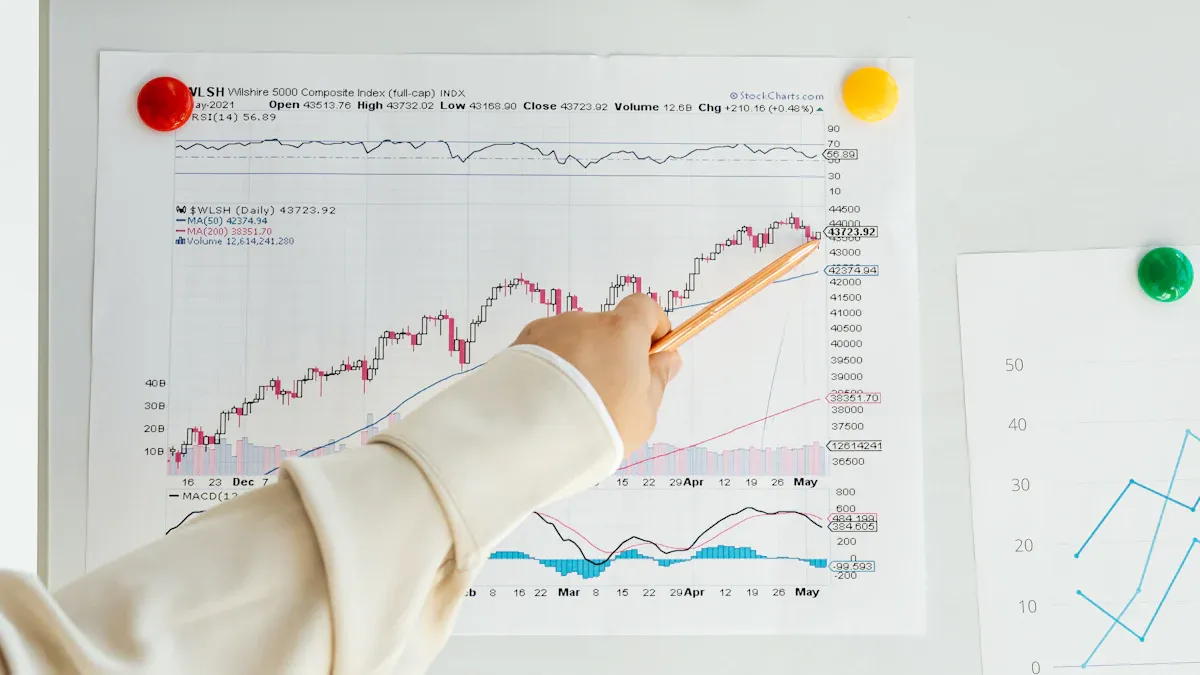
Image Source: pexels
Defense and risk management preserve capital, while offensive strategies aim to create excess returns by utilizing market volatility. Smart investors know how to find order in chaos, viewing volatility as opportunity.
Contrarian Investing: Positioning During Market Panic
The core of contrarian investing is buying when the market is in extreme panic and assets are severely undervalued. This strategy requires independent thinking and strong psychological resilience. A practical tool for measuring market sentiment is the Fear and Greed Index. When the index is in the “extreme fear” zone, it is often a signal for contrarian investors to start positioning.
| Time | Index Value | Sentiment State |
|---|---|---|
| 6 Hours Ago | 32 | Fear |
| Yesterday | 32 | Fear |
| 1 Week Ago | 24 | Extreme Fear |
| 1 Month Ago | 29 | Fear |
History proves that investors daring to go against the trend in crises often reap substantial rewards.
| Investment Target | Market Panic Background | Success Factors |
|---|---|---|
| Bank of America (post-2008) | Financial crisis caused sharp stock price drop, market feared bankruptcy. | Identified institutions with long-term survival ability, waiting for sentiment shift. |
| Apple (early 21st century) | Outdated product line, small market share, dim prospects. | Ignored market consensus, believed in brand and innovation potential. |
| Energy Stocks (post-1999) | Oil price crash, weak demand, extreme market pessimism. | Identified value under extreme sentiment, believed in cyclical recovery. |
Following Trends: CTA Strategies and Strong Cyclical Sectors
In contrast to contrarian investing, trend-following strategies (CTA) focus on going with the momentum. These strategies identify market trends through algorithms, buying on uptrends and selling on downtrends. They do not predict the future but follow current momentum.
The logic of CTA strategies is simple: an asset that is rising has a higher probability of continuing to rise than falling. And vice versa.
This strategy covers stocks, bonds, commodities, and other assets, aiming to profit from sustained trends. However, its performance varies greatly in different market environments. For example, the Simplify Managed Futures Strategy ETF (CTA) has significantly underperformed the S&P 500 index fund over the past year.
| Metric | Simplify Managed Futures Strategy ETF (CTA) | SPY ETF |
|---|---|---|
| Past Year Price Return | +3.7% | +13.6% |
| Past Three Months Return | -1.3% | +5.6% |
This indicates that trend strategies may perform poorly in ranging markets or during trend reversals.
Short-Term Trading: Pros and Cons of Swing and Day Trading
Swing trading and day trading attempt to profit by capturing short-term stock price fluctuations. These strategies require significant time and effort and carry extremely high risks.
Warning: Data shows that the vast majority of short-term traders ultimately end in losses. Studies indicate that about 70% of day traders lose money each quarter, and only 1% remain consistently profitable after five years.
Frequent trading also incurs high costs, eroding already thin profits:
- Short-Term Capital Gains Tax: Profits from assets held less than one year are taxed at ordinary income rates.
- Trading Costs: Including commissions, spreads, data subscription fees, and slippage.
For traders choosing such high-risk strategies, flexible fund transfers are crucial. Platforms like Biyapay that support fast multi-currency fund flows can provide necessary capital scheduling support for traders.
In volatile markets, the key to success is not a single strategy but building a dynamic trading system integrating defense, risk management, and offense. This requires investors to have long-termism and strict investment discipline, avoiding emotional trading and ineffective market timing. Studies show that the impact of emotions on trading performance is complex, with inexperienced traders particularly susceptible to negative effects.
The stock market is designed to transfer money from the active to the patient.
Ultimately, investors should view volatility as an opportunity to optimize portfolios and achieve long-term growth rather than a pure threat. Sticking to the established plan, patience will be the best partner for traversing cycles.
FAQ
Is there a single best strategy in the market?
There is no single “best” strategy in the market. Successful investors build a dynamic combination of defensive, risk management, and offensive strategies based on market conditions and personal goals. Flexibility is key to coping with volatility.
Are dividend stocks absolutely safe investments?
Dividend stocks are not completely risk-free. Although they provide stable cash flows, their stock prices can still fall during overall market sharp declines or company fundamental deterioration, and dividends may be reduced or suspended.
Should investors try to predict market bottoms?
Most studies indicate that precise market timing is nearly impossible to achieve successfully. Investors attempting to predict bottoms often miss the fastest rebound phases, damaging long-term returns instead. Sticking to the investment plan is more effective than frequent timing.
How much cash should be held in a volatile market?
The ideal cash holding proportion varies by individual, mainly depending on the following factors:
- Personal risk tolerance
- Near-term fund needs
- Judgment of future market opportunities
Holding appropriate cash can reduce portfolio volatility and provide “ammunition” for buying assets during market pullbacks.
*This article is provided for general information purposes and does not constitute legal, tax or other professional advice from BiyaPay or its subsidiaries and its affiliates, and it is not intended as a substitute for obtaining advice from a financial advisor or any other professional.
We make no representations, warranties or warranties, express or implied, as to the accuracy, completeness or timeliness of the contents of this publication.
Related Blogs of

US-China Trade War Enters New Phase: How the Tech Industry Can Respond to Supply Chain Impacts


Is the W-8BEN Form Required for Opening a US Stock Account? Understand How to Save on Taxes in One Article


Focusing on AI and Semiconductors: In-Depth Analysis of 10 Leading Future US Tech Stocks


Master US Stock Trading Hours in One Article: Never Miss Pre-Market and After-Hours Opportunities

Choose Country or Region to Read Local Blog
 Australia
 Austria
 Belgium
 Canada
 Cyprus
 Czech Republic
 Denmark
 Estonia
 Finland
 France
 Germany
 Greece
 Hong Kong
 India
India Indonesia
 Ireland
 Italy
Italy Japan
Japan Latvia
 Lithuania
 Luxembourg
 Malaysia
 Malta
Malta Morocco
 Nepal
Nepal Netherlands
 New Zealand
 Norway
 Pakistan
 Philippines
 Poland
 Portugal
 Romania
 Singapore
 Slovakia
 Slovenia
 South Africa
 South Korea
 Spain
Spain Sweden
 Thailand
 The United States
 Turkey
 United Arab Emirates
 United Kingdom
 Vietnam
Contact Us




BIYA GLOBAL LLC is a licensed entity registered with the U.S. Securities and Exchange Commission (SEC No.: 802-127417); a certified member of the Financial Industry Regulatory Authority (FINRA) (Central Registration Depository CRD No.: 325027); regulated by the Financial Industry Regulatory Authority (FINRA) and the U.S. Securities and Exchange Commission (SEC).
BIYA GLOBAL LLC is registered with the Financial Crimes Enforcement Network (FinCEN), an agency under the U.S. Department of the Treasury, as a Money Services Business (MSB), with registration number 31000218637349, and regulated by the Financial Crimes Enforcement Network (FinCEN).
BIYA GLOBAL LIMITED is a registered Financial Service Provider (FSP) in New Zealand, with registration number FSP1007221, and is also a registered member of the Financial Services Complaints Limited (FSCL), an independent dispute resolution scheme in New Zealand.