Beginner's Guide: Pros and Cons of US Stock Pre-Market and After-Hours Trading




Image Source: pexels
Have you ever seen a stock experience dramatic price movement right after earnings release? Recently, AlphaTime Acquisition Corp’s stock surged 393.33% in pre-market trading. This is the magic and risk of pre-market trading.
Note: Pre-market and after-hours trading is “a playground for experts and a testing ground for beginners.” It occurs outside regular trading hours (Eastern Time 9:30-16:00), but the rules and risks are completely different. You need to understand the rules, identify risks, and judge whether you are suited to participate.
US stock after-hours trading and similar sessions are usually direct reactions to recent news and company announcements.
Key Takeaways
- Pre-market and after-hours trading occur outside regular hours, allowing investors to react quickly to news.
- Pre-market and after-hours trading carry high risks due to low liquidity, large price swings, and limit-order-only restrictions.
- The advantages of pre-market and after-hours trading include reacting ahead to major news and flexibly adjusting portfolios.
- Beginners participating in pre-market and after-hours trading should start with small positions and set strict stop-loss points.
- Pre-market and after-hours trading suit experienced investors; beginners should observe the market more rather than rushing to profit.
Pre-Market and After-Hours Trading: Definitions and Differences

Image Source: pexels
To participate in pre-market and after-hours trading, you first need to understand what they are and how they differ from regular trading sessions. Simply put, they are additional trading periods before the market “opens” and after it “closes.”
Pre-Market Trading Time and Role
Pre-market trading allows you to buy and sell stocks before the official US market open. Its main role is to let investors react immediately to major overnight news (such as overseas market developments or company announcements).
Tip: Most brokers offer pre-market trading focused on Eastern Time 4:00 AM to 9:30 AM. Taking Nasdaq as an example, its pre-market session is as follows:
Exchange Session Start Time End Time Nasdaq Pre-Market Trading 4:00 AM Eastern Time 9:30 AM Eastern Time
After-Hours Trading Time and Role
After-hours trading occurs after the regular trading day ends. Many companies, especially tech giants, prefer to release quarterly earnings after the close. Thus, US stock after-hours trading becomes a key window for investors to trade immediately based on earnings performance.
Nasdaq’s after-hours trading typically runs from 4:00 PM to 8:00 PM (Eastern Time).
Core Differences from Regular Trading Sessions
The rules for pre-market and after-hours trading differ vastly from regular sessions. The biggest difference lies in order matching and price protection mechanisms. During these sessions, your orders no longer enter a central market aggregating all quotes but are routed to a separate electronic trading system .
Important Difference: During regular sessions, regulators require brokers to execute orders at the “National Best Bid and Offer” . This rule does not apply in pre-market and after-hours sessions. This means the price you see may not be the best available across the entire market.
The table below clearly shows the core differences:
| Feature | Regular Trading Session | Pre-Market and After-Hours Sessions |
|---|---|---|
| Order Matching | Quotes aggregated, representing best prices across all markets. | Quotes only from a single electronic system, not guaranteed best market-wide. |
| Order Types | Accepts market orders, limit orders, and more. | Limit orders only; no market orders. |
| Price Protection | Regulatory rules ensure best available market price. | No guarantee of best execution price. |
| Liquidity | High activity and liquidity. | Fewer participants, typically lower liquidity. |
Common Characteristics: The Essence of High Risk and High Reward
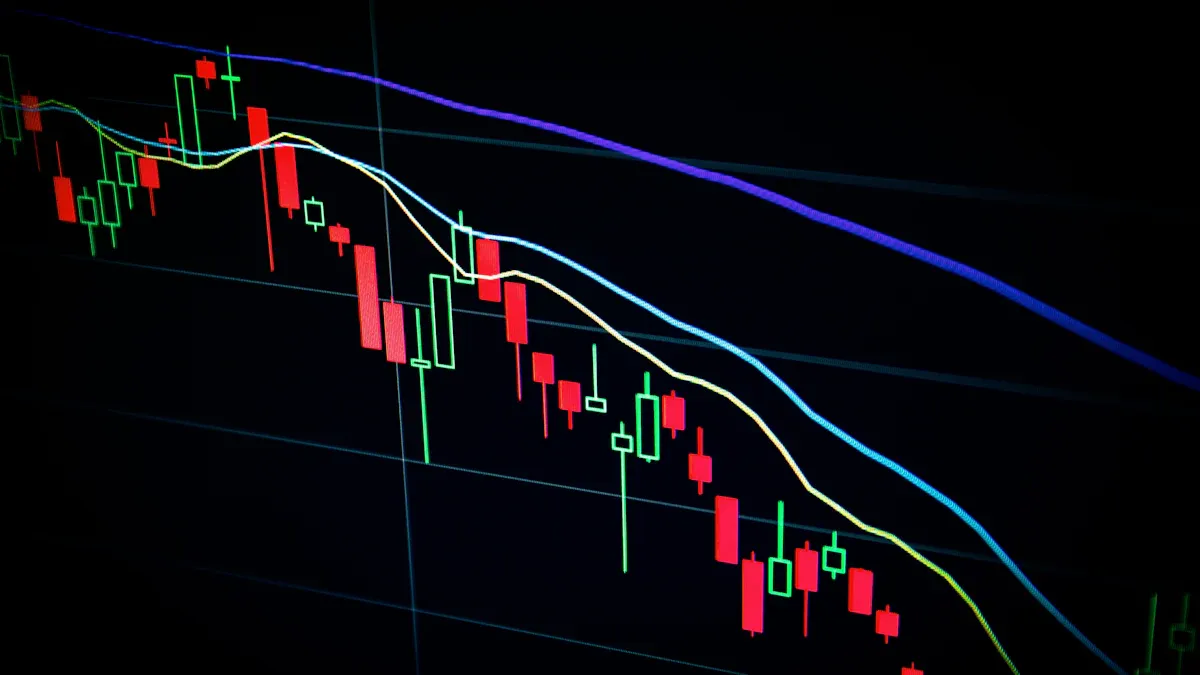
Image Source: unsplash
Pre-market and after-hours trading is like a double-edged sword—it offers opportunities but comes with significant risks. Before committing funds, you must understand the common characteristics of these sessions.
Low Liquidity and Wide Bid-Ask Spreads
Far fewer participants join pre-market and after-hours sessions than regular hours. Lower trading volume means very low liquidity. This directly leads to one issue: bid-ask spreads widen significantly.
For example, during regular hours, an active stock’s spread might be just $0.01. But in pre-market, with scarce buyers and sellers, the spread could widen to $0.10 or more. This means higher buying costs and lower selling prices.
Extreme Price Volatility Like a Roller Coaster
Due to insufficient liquidity, even a moderately large buy or sell order can cause dramatic price swings. Prices may move like a roller coaster, surging or plunging in short periods.
Note: This extreme volatility increases your trading risk. You might buy at the peak or sell at the bottom, causing unnecessary losses.
Information Opacity: Missing Depth of Book Data
During regular sessions, quotes you see aggregate the “National Best Bid and Offer” from multiple markets. But in pre-market and after-hours, that’s not the case.
Quotes you see may come only from a single electronic trading system, not representing the best market-wide price. You cannot access full Level II depth of book data, making it hard to judge price validity.
Limited Trading Tools: Limit Orders Only
To protect investors from extreme volatility, most brokers allow only limit orders (limit orders) in these sessions.
- What is a limit order? It lets you set a maximum price for buying or a minimum for selling. Your order executes only if the market reaches or betters your set price.
Many brokers disable market orders in US stock after-hours and similar sessions. This is because market orders in low-liquidity conditions could execute far from expected, causing massive slippage and unexpected losses. Mandating limit orders is a key risk control measure.
Advantages and Opportunities of Pre-Market and After-Hours Trading
Despite the risks, pre-market and after-hours trading offer opportunities unmatched in regular sessions for prepared investors. Understanding these advantages helps you decide whether to use these special windows.
Advantage 1: React First to Major News and Earnings
Many price-moving events—like earnings, mergers, FDA approvals, or macro data—occur outside regular hours. Pre-market and after-hours trading let you react immediately rather than wait for the next open.
Scenario Simulation: A tech company releases better-than-expected earnings after hours. Waiting until the next open might see the stock gap up 15%, missing the best entry. After-hours trading lets you act right after the release.
You can use this session to gain an edge with the latest information. Experienced traders typically:
- Analyze market news: Quickly interpret earnings, geopolitics, etc., and assess potential price impact.
- Monitor pre-market activity: Watch early price and volume changes to gauge market sentiment.
- Use technical indicators: Combine pre-market patterns to identify potential entries/exits.
- Adjust portfolio: Rebalance positions based on overnight news ahead of regular session.
Advantage 2: Use After-Hours Trading to Adjust Positions
Post-close time is golden for review and strategy adjustment. You can evaluate the day’s trades calmly and plan for the next day. US stock after-hours trading enables these adjustments.
For example, optimize your portfolio by:
- Evaluating performance: Review successful and failed trades, identify key factors.
- Analyzing individual trades: Check if outcomes matched expectations and decisions fit market conditions.
- Preparing for next session: Learn from errors to avoid repeats.
- Setting trade plans: Based on after-hours info and futures, outline potential entries, targets, and stops.
Tip: When adjusting after hours, always use limit orders. With wider spreads, set buy limits above current ask or sell limits below current bid to improve fill chances.
Advantage 3: Flexible Timing for Global Investors
Regular US trading hours (Eastern Time 9:30 AM to 4:00 PM) are inconvenient for Asia and Europe. Pre-market and after-hours extend the window, letting global investors participate at convenient times.
This logic mirrors the 24-hour forex market. Global markets overlap across time zones creating unique windows.
- European Investors: Can participate in US pre-market during their afternoon/evening.
- Asian Investors: Can trade after-hours in their morning. For Hong Kong traders, US 8:00 PM close is 8:00 AM Hong Kong time.
This overlap brings higher liquidity and volatility, offering more opportunities without disrupting sleep.
Risks and Challenges of Pre-Market and After-Hours Trading
Opportunities come with risks. Before being drawn by potential returns, recognize the huge challenges. These stem from fundamental flaws in the trading environment, especially deadly for beginners.
Risk 1: Slippage and Execution Price Uncertainty
One common issue in these sessions is slippage. Slippage is the difference between your order price and final execution.
Slippage often occurs in high-volatility or low-liquidity conditions. With few participants, delays between order placement and execution can cause price changes, leading to slippage.
For example, you see a stock at $100 and place a buy limit. With few buyers, it might fill at $100.50. That extra $0.50 is your cost, eroding profits.
To understand slippage:
- Liquidity is key: More buyers/sellers mean tighter spreads and less volatility. Pre-market/after-hours are the opposite.
- Wider spreads are normal: Avoid trading near open/close when spreads widen. The entire extended session behaves this way.
- Even algorithms suffer: Professional algo strategies face wider spreads and poor fills in low-volume periods.
Risk 2: Price Gaps and “Opening Kill”
Pre-market prices do not guarantee regular session direction. You often see price gaps.
This means a clear gap between pre-market close and regular open. More dangerously, you might face "opening kill."
Scenario Simulation: A stock rises 10% pre-market on good news. You chase and buy, expecting more gains. But at 9:30 AM open, institutions sell heavily, turning +10% to -5%. You’re trapped at the high.
This happens because pre-market is mostly retail; institutions enter at open, instantly shifting direction.
Risk 3: Price Traps: After-Hours Gains Don’t Guarantee Next-Day Rise
Pre-market/after-hours prices are highly deceptive; beginners easily fall into price traps. An after-hours rise may just be a few traders’ emotional reactions, not market consensus.
View extended-hours prices as a “small poll” vs. regular session’s “full vote.” The poll can be overturned next day. Many stocks surging after hours open flat or reverse the next day.
Remember: Extended-hours moves are references only, never sole basis for next-day decisions. They reflect a minority view, not the full market truth.
Risk 4: Low Volume Leading to Unfilled Orders
This is a direct and frustrating risk. With few participants, even reasonable limit orders may not fill or only partially.
Imagine:
- Your stock reports bad earnings after hours, price drops.
- You rush to place a sell limit to stop loss.
- But no buyers at your price.
Your sell hangs unfilled as price keeps falling, losses mount. Common in low-volume small caps—you get “stuck” in unwanted positions.
Beginner Decision: Should I Participate?
After understanding pros and cons, the key question: Should you participate? This decision requires your strategy, emotional control, and risk tolerance.
Scenarios to Consider Participating: Clear Trading Signals
Consider only if you spot clear signals fitting your system—not chasing hunches. Institutions trade these sessions to react to major news/earnings, creating opportunities.
Effective signals usually have:
- Price breaking key levels: Strong break of support/resistance.
- Significant volume surge: Much higher than average, confirming validity.
- Technical confirmation: Momentum indicators like RSI or MACD align, filtering false signals.
Only when these align is your decision evidence-based, not gambling.
Scenarios to Stay Out: Emotional or No Strategy
If driven by fear of missing out or excitement from surges, stop immediately. Volatility amplifies emotions, leading to traps.
Remember: Emotions are investing’s enemy. In volatile markets, fear and greed dominate. You might hold losses due to loss aversion or seek only confirming info due to bias.
Studies show volatile markets significantly increase anxiety. Without a plan, these sessions become an emotional “meat grinder.”
Self-Assessment: Risk Tolerance and Experience
Finally, honestly evaluate yourself. Ask:
- How much potential loss can I bear?
- Would a failed trade affect my life?
- Do I have quick analysis and disciplined execution skills?
Pre-market/after-hours suit experienced, disciplined traders. If beginner or low tolerance, best is “watch more, trade less.” Use as a sentiment observation window, not quick-profit tool.
Beginner Safety Guidelines
If you decide to try, follow strict safety guidelines. These protect you in high-risk sessions and prevent becoming “leeks.”
Choose the Right Broker
First, confirm your broker supports extended hours and specific times. Not all do. Modern platforms like Biyapay offer global access.
Check broker rules. Fidelity, for example:
- Pre-market: 7:00 AM to 9:28 AM ET.
- After-hours: 4:00 PM to 8:00 PM ET.
- All orders must be limit orders.
- Short selling has stricter pre-market restrictions.
A transparent, stable broker is step one.
Start with Small Positions
Never bet everything on unfamiliar rules. High volatility means start small.
Beginner Rule: Use no more than 1% to 2% of your total portfolio for extended-hours trades. Even if wrong, losses are controllable, not derailing your plan.
Small positions prioritize learning market feel over profit.
Use Limit Orders to Control Costs
Limit orders are your only tool and best protection. They prevent chasing highs or panic sells.
Example: Stock fluctuating around $105. Chasing might fill at $106+. Set $103 buy limit—executes only at $103 or better, controlling cost and avoiding emotion-driven buys.
Set Strict Mental Stop-Loss Levels
Most brokers don’t allow automatic stops in extended hours; rely on discipline. Decide pre-order: If wrong, exit at what price unconditionally?
This preset is your mental stop-loss. Hit it, manually submit limit to exit—no hesitation. Without strict stops, one mistake can cause heavy losses.
Pre-market and after-hours trading is a double-edged sword. It amplifies profit potential but equally magnifies loss risk.
Final Advice for Beginners: Before fully understanding rules and risks, best is “watch more, trade less.” Treat as a learning/observation window, not a rush-profit tool.
Investing is a marathon. Building knowledge and systems steadily matters more than chasing short-term thrills.
FAQ
Can all stocks be traded pre-market and after-hours?
No. Usually only those listed on major exchanges like Nasdaq or NYSE. Very low-volume or OTC stocks may not support it. Check with your broker for specific eligibility.
Do pre-market/after-hours prices affect the next day’s open?
They influence but don’t determine. View as sentiment reference. Official open is set by opening auction; institutions entering can cause big changes.
Why didn’t my limit order fill?
Usually due to low liquidity. Few buyers/sellers.
- Buy orders: No sellers at or below your price.
- Sell orders: No buyers at or above your price.
Is there extra fee for pre-market/after-hours trading?
Most major brokers charge no extra fees. Costs remain standard commissions or spreads. However, wider bid-ask spreads mean higher implicit costs.
*This article is provided for general information purposes and does not constitute legal, tax or other professional advice from BiyaPay or its subsidiaries and its affiliates, and it is not intended as a substitute for obtaining advice from a financial advisor or any other professional.
We make no representations, warranties or warranties, express or implied, as to the accuracy, completeness or timeliness of the contents of this publication.
Related Blogs of

US Stock Market Holiday Countdown: How Investors Should Position for Next Week's Trading


US-China Trade War Enters New Phase: How the Tech Industry Can Respond to Supply Chain Impacts


Master US Stock Trading Hours in One Article: Never Miss Pre-Market and After-Hours Opportunities

Essential Apps for Getting Started with US Stock Futures: These Apps Will Turn You into a Pro
Choose Country or Region to Read Local Blog
 Australia
 Austria
 Belgium
 Canada
 Cyprus
 Czech Republic
 Denmark
 Estonia
 Finland
 France
 Germany
 Greece
 Hong Kong
 India
India Indonesia
 Ireland
 Italy
Italy Japan
Japan Latvia
 Lithuania
 Luxembourg
 Malaysia
 Malta
Malta Morocco
 Nepal
Nepal Netherlands
 New Zealand
 Norway
 Pakistan
 Philippines
 Poland
 Portugal
 Romania
 Singapore
 Slovakia
 Slovenia
 South Africa
 South Korea
 Spain
Spain Sweden
 Thailand
 The United States
 Turkey
 United Arab Emirates
 United Kingdom
 Vietnam
Contact Us




BIYA GLOBAL LLC is a licensed entity registered with the U.S. Securities and Exchange Commission (SEC No.: 802-127417); a certified member of the Financial Industry Regulatory Authority (FINRA) (Central Registration Depository CRD No.: 325027); regulated by the Financial Industry Regulatory Authority (FINRA) and the U.S. Securities and Exchange Commission (SEC).
BIYA GLOBAL LLC is registered with the Financial Crimes Enforcement Network (FinCEN), an agency under the U.S. Department of the Treasury, as a Money Services Business (MSB), with registration number 31000218637349, and regulated by the Financial Crimes Enforcement Network (FinCEN).
BIYA GLOBAL LIMITED is a registered Financial Service Provider (FSP) in New Zealand, with registration number FSP1007221, and is also a registered member of the Financial Services Complaints Limited (FSCL), an independent dispute resolution scheme in New Zealand.