2025 US Stock Market Opening Hours Guide: What Time in Beijing Time? Daylight Saving and Standard Time Notes



Image Source: unsplash
To help you clearly plan your 2025 trading, here is a key US stock opening hours conversion table:
- During Daylight Saving Time (March 9, 2025 - November 2, 2025):
- US stock regular trading hours: Beijing time 21:30 - next day 04:00
- During Standard Time (January 1, 2025 - March 8, 2025 and November 3, 2025 - December 31, 2025):
- US stock regular trading hours: Beijing time 22:30 - next day 05:00
You are participating in an extremely active trading market. In 2024, the average daily trading volume of US stocks reached 12.2 billion shares, a 24% year-over-year increase. This makes precisely mastering trading sessions crucial for your strategy.
Key Takeaways
- US stock opening hours change with Daylight Saving Time and Standard Time. During Daylight Saving Time, US stocks open at 21:30 Beijing time; during Standard Time, at 22:30 Beijing time.
- 2025 Daylight Saving Time starts on March 9 and ends on November 2. Standard Time occurs in two segments: at the beginning and end of the year.
- In addition to regular trading sessions, US stocks have pre-market, after-hours, and overnight trading. These extended sessions provide more trading opportunities but with lower liquidity and higher volatility.
- Investors should pay attention to US stock market holidays and half-day trading days. These special dates affect trading arrangements and require advance planning.
- Understanding US stock trading hours is important for investors. It helps better plan trades and avoid missing opportunities.
Regular US Stock Opening Hours: Daylight Saving Time vs. Standard Time

Image Source: pexels
You may have noticed that US stock opening hours change throughout the year. This is not arbitrary but stems from the Daylight Saving Time (DST) and Standard Time system implemented in the United States. Understanding the switching patterns between these two times is the first step to precisely arranging your trading plans.
2025 Daylight Saving Time Start and End Dates
Daylight Saving Time, abbreviated as DST, is a system to save energy and make better use of daylight by advancing clocks by one hour. Its core idea is to adjust our schedules to have more daylight in the evenings.
According to the U.S. Energy Policy Act, Daylight Saving Time starts on the second Sunday in March and ends on the first Sunday in November.
2025 U.S. Daylight Saving Time Cycle
- Start Date: March 9, 2025 (Sunday)
- End Date: November 2, 2025 (Sunday)
During Daylight Saving Time, the time difference between U.S. Eastern Time and Beijing Time shortens to 12 hours. Therefore, the corresponding US stock opening hours are one hour earlier than during Standard Time.
2025 Standard Time Start and End Dates
Standard Time, or winter time, is the uniform time standard used in geographic regions. When Daylight Saving Time ends, clocks are set back one hour to return to standard time.
2025 Standard Time is divided into two phases: one at the beginning of the year and one starting at the end.
- First Phase: January 1, 2025 to March 8, 2025
- Second Phase: November 3, 2025 to December 31, 2025
During Standard Time, the time difference between U.S. Eastern Time and Beijing Time is 13 hours.
How to Distinguish Between Daylight Saving Time and Standard Time?
Distinguishing between these two time systems is very simple. You can remember the mnemonic: “Spring forward, fall back”. In spring, clocks are moved forward one hour to enter Daylight Saving Time; in fall, clocks are moved back one hour to return to Standard Time.
You might wonder why such a complex system exists. There’s an interesting history behind it. Before 1966, Daylight Saving Time observance in the U.S. was very chaotic. States, cities, and even localities could decide independently whether and when to adjust time. A real example from that time: a bus driver traveling just 35 miles between West Virginia and Ohio had to experience seven time changes!
This chaos caused huge troubles for industries operating across states, like railroads and broadcasting. To end this situation, the U.S. Congress passed the Uniform Time Act of 1966, establishing uniform Daylight Saving Time start and end dates nationwide.
However, the act also allows states to legislate opting out of Daylight Saving Time. Therefore, note that the following regions use standard time year-round:
- Arizona (most areas)
- Hawaii
- American Samoa
- Guam
- Puerto Rico and other overseas territories
For global investors, this system directly affects US stock opening hours. You need to pay special attention to the time switch points in March and November each year to ensure your trading activities stay in sync with the market.
Pre-Market and After-Hours Trading Hours Guide
You might think US stock trading is limited to the regular 6.5-hour session, but that’s not the case. Before regular opening and after closing, there are “extended trading hours” full of opportunities and challenges.
As of early 2025, pre-market and after-hours trading volume accounts for over 11% of total US stock trading volume. This figure has grown significantly from 5% in 2019, showing more investors are utilizing these sessions. Understanding and using them well can make your trading strategy more flexible.
Pre-Market Trading Hours
Pre-market trading refers to stock buying and selling activities before the regular trading session begins. This session allows you to react in advance to overnight news or events.
Pre-market trading hours may vary slightly by exchange and broker. For example, some NYSE platforms start at 4:00 AM Eastern Time, while brokers like Charles Schwab may offer services starting at 7:00 AM.
Here are the pre-market session hours in Beijing time:
| Trading Session | U.S. Eastern Time | Beijing Time (DST) | Beijing Time (Standard Time) |
|---|---|---|---|
| Pre-Market Trading | 04:00 - 09:30 | 16:00 - 21:30 | 17:00 - 22:30 |
After-Hours Trading Hours
After-hours trading continues after the regular session ends. Many important company earnings reports and news releases are announced during this time, making after-hours trading very active.
Most exchanges (like NYSE and Nasdaq) have after-hours trading sessions typically lasting until 8:00 PM. Some powerful trading platforms, such as Biyapay, support participation in these extended sessions and even offer longer trading windows for more flexible portfolio management.
Here are the after-hours session hours in Beijing time:
| Trading Session | U.S. Eastern Time | Beijing Time (DST) | Beijing Time (Standard Time) |
|---|---|---|---|
| After-Hours Trading | 16:00 - 20:00 | Next day 04:00 - 08:00 | Next day 05:00 - 09:00 |
Why Pay Attention to Pre-Market and After-Hours Trading?
Paying attention to pre-market and after-hours trading is crucial because it provides unique opportunities beyond regular US stock opening hours, but it also comes with specific risks.
1. Seize Earnings and News Release Opportunities
Companies often release quarterly earnings after the close to avoid excessive impact on the regular session. This makes after-hours the first window for the market to digest this information.
Real Cases of Dramatic After-Hours Price Movements:
- Netflix (NFLX): Once dropped over 14% in after-hours trading after missing subscriber growth expectations in an earnings report](https://www.ig.com/en/learn-to-trade/ig-academy/shorts/corporate-earnings-reports).
- Apple (AAPL): Surged over 5% in after-hours after reporting earnings and iPhone sales far exceeding expectations.
- Starbucks (SBUX): Interestingly, even with strong earnings data, failure to raise future guidance led to a 5% drop in after-hours](https://www.nasdaq.com/articles/how-stock-prices-correlate-with-quarterly-earnings-and-when-you-should-buy), reflecting the complexity of investor sentiment.
2. Advance Positioning and Risk Management
By participating in pre-market and after-hours trading, you can:
- React in Advance: Buy or sell stocks before other investors based on the latest news.
- Hedge Risks: If a held stock releases unfavorable news, stop losses in time to avoid greater losses at the next day’s open.
3. Understand Extended Session Risks
Despite attractive opportunities, you must be aware of the risks in pre-market and after-hours trading:
- Lower Liquidity: Fewer participants mean orders may not execute immediately or only partially.
- Wider Spreads: The gap between bid and ask prices widens. This means higher buy prices and lower sell prices.
- Increased Volatility: With low volume, even small orders can cause large price swings, making prices less stable than in regular sessions.
You can see that the vast majority of volume (about 89%) remains in the regular session.
Therefore, when participating in pre-market and after-hours trading, it is recommended to use limit orders instead of market orders to avoid unexpected losses from sharp price fluctuations.
US Stock Overnight Trading
In addition to pre-market and after-hours, you can access a more special session—US stock overnight trading. This session is mainly designed to meet the needs of investors in different time zones like Asia, allowing operations during your daytime.
What is US Stock Overnight Trading?
US stock overnight trading refers to trading during U.S. Eastern Time nighttime, filling the gap from after-hours end to next-day pre-market start. This enables nearly 24/5 uninterrupted trading for some stocks and ETFs.
However, note that overnight trading has relatively few participants, so volume is usually much lower than regular sessions, with potentially lower liquidity.
To participate in overnight trading, use brokers that support this feature. Current mainstream U.S. brokers offering overnight trading include:
- Interactive Brokers
- Robinhood
- Webull
- E*TRADE
These brokers offer varying trading durations; some platforms (like Biyapay) are committed to integrating these features for more convenient global asset allocation.
Overnight Trading Hours (Beijing Time)
Overnight trading times vary by broker. For example, Interactive Brokers runs from 8:00 PM to 3:50 AM Eastern Time, while Robinhood offers a longer window from 8:00 PM to 7:00 AM.
Overall, the core US stock overnight session is typically between 8:00 PM and next-day 4:00 AM Eastern Time. The table below clearly shows this session in Beijing time.
| Trading Session | U.S. Eastern Time | Beijing Time (DST) | Beijing Time (Standard Time) |
|---|---|---|---|
| Overnight Trading | 20:00 - Next Day 04:00 | 08:00 - 16:00 | 09:00 - 17:00 |
Important Note
Overnight trading is not available for all stocks. Usually only select popular stocks and ETFs offer this service. Before trading, confirm eligible instruments and exact hours through your broker platform.
2025 US Stock Market Holiday Calendar
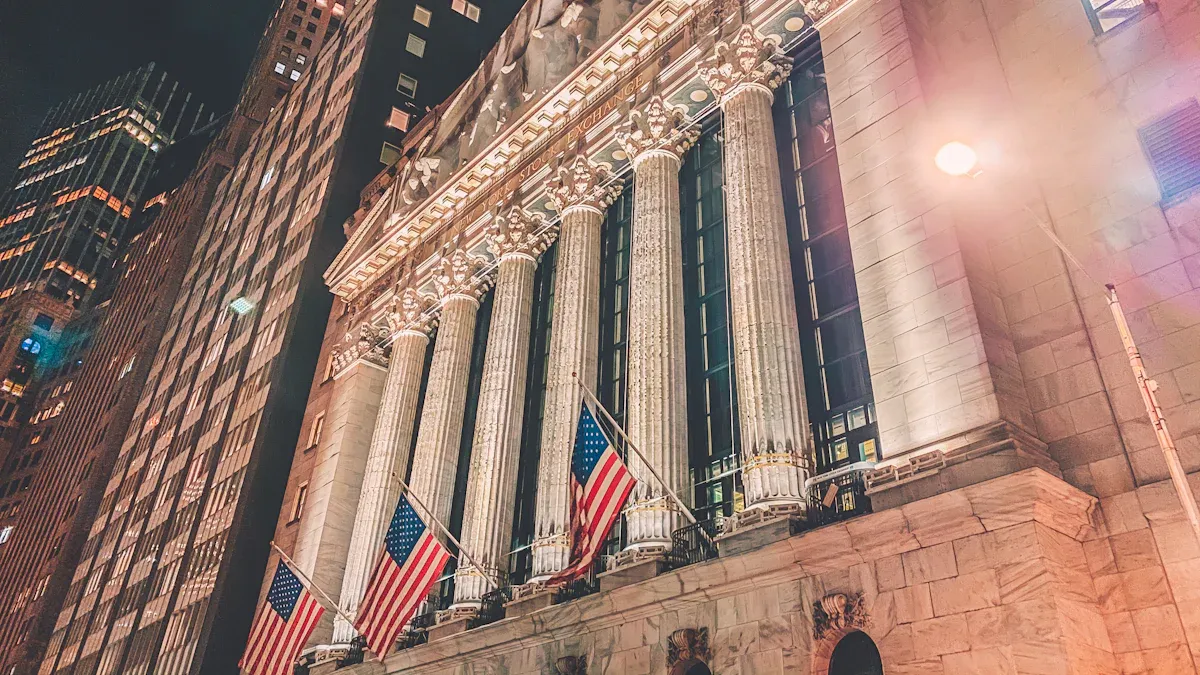
Image Source: pexels
Besides mastering regular opening and closing times, remember US stock market statutory holidays. These dates represent important U.S. holidays when the market fully closes. Advance planning helps avoid inability to execute trades during closures.
Full-Year Holiday Dates Overview
The following is the 2025 full-year US stock market holiday schedule compiled from official NYSE and Nasdaq calendars. Save this table in your trading notes.
| Date | Holiday Name | Day of Week |
|---|---|---|
| January 1, 2025 | New Year’s Day | Wednesday |
| January 20, 2025 | Martin Luther King Jr. Day | Monday |
| February 17, 2025 | Washington’s Birthday/Presidents’ Day | Monday |
| April 18, 2025 | Good Friday | Friday |
| May 26, 2025 | Memorial Day | Monday |
| June 19, 2025 | Juneteenth | Thursday |
| July 4, 2025 | Independence Day | Friday |
| September 1, 2025 | Labor Day | Monday |
| November 27, 2025 | Thanksgiving | Thursday |
| December 25, 2025 | Christmas | Thursday |
About Juneteenth
You may notice that “Juneteenth” is a relatively new federal holiday (established in 2021). It commemorates June 19, 1865, when enslaved African Americans in Texas finally learned of their freedom—more than two years after the Emancipation Proclamation. Thus, it is also seen by many as America’s “second Independence Day”, symbolizing freedom and liberation.
Half-Day Trading Day Special Reminders
Around certain major holidays, the US stock market opens but closes early. These “half-day trading days” have very short sessions; missing them can cost trading opportunities.
In 2025, pay special attention to these half-day trading days:
| Holiday/Date | Early Close Time (ET) | Corresponding Beijing Time |
|---|---|---|
| Day Before Independence Day (July 3, 2025) | 1:00 PM | Next day 1:00 AM (DST) |
| Day After Thanksgiving (November 28, 2025) | 1:00 PM | Next day 1:00 AM (DST) |
| Christmas Eve (December 24, 2025) | 1:00 PM | Next day 2:00 AM (Standard Time) |
Mark these special dates on your trading calendar. On these days, market liquidity may drop rapidly near close; complete trades in advance.
Hope this guide helps you clearly plan 2025 trading. Remember two key time points as the cornerstone of your strategy.
Key Takeaways
- Daylight Saving Time: Opens at Beijing time 21:30
- Standard Time: Opens at Beijing time 22:30
Check your trading software settings during the March and November switches to ensure operations sync with the latest US stock opening hours and avoid missing opportunities.
Wishing you smooth investing in 2025.
FAQ
What are the key time points I need to remember most?
Remember two switch dates: March 9, 2025 and November 2, 2025. During Daylight Saving Time, US stocks open at 21:30 Beijing time. After entering Standard Time, opening shifts one hour later to 22:30.
Why does the US implement Daylight Saving Time?
The US implements Daylight Saving Time mainly to save energy. By advancing clocks one hour, people better utilize evening daylight, reducing reliance on artificial lighting. This system aligns daytime activities more with sunlight hours.
What if a US stock holiday falls on a weekend?
If a statutory holiday falls on Saturday, the market usually closes on the previous Friday. If on Sunday, it closes on the following Monday.
For example, if New Year’s Day in 2026 is Friday, it closes that day. But if on Saturday, December 31 of the previous year (Friday) closes.
What are the differences between pre-market, after-hours, and overnight trading?
These three sessions are outside regular trading hours but cover different periods.
- Pre-Market Trading: Session before regular open.
- After-Hours Trading: Session after regular close.
- Overnight Trading: Fills the gap from after-hours to next-day pre-market, mainly serving Asian time zone investors.
*This article is provided for general information purposes and does not constitute legal, tax or other professional advice from BiyaPay or its subsidiaries and its affiliates, and it is not intended as a substitute for obtaining advice from a financial advisor or any other professional.
We make no representations, warranties or warranties, express or implied, as to the accuracy, completeness or timeliness of the contents of this publication.
Related Blogs of

Focusing on AI and Semiconductors: In-Depth Analysis of 10 Leading Future US Tech Stocks

Annual Review: Best Performing US Stock ETFs in 2026 and the Logic Behind Them


A Blessing for Small Investors: Finding the Lowest Trading Cost US Stock Brokers

US Stock Market Holiday Countdown: How Investors Should Position for Next Week's Trading

Choose Country or Region to Read Local Blog
 Australia
 Austria
 Belgium
 Canada
 Cyprus
 Czech Republic
 Denmark
 Estonia
 Finland
 France
 Germany
 Greece
 Hong Kong
 India
India Indonesia
 Ireland
 Italy
Italy Japan
Japan Latvia
 Lithuania
 Luxembourg
 Malaysia
 Malta
Malta Morocco
 Nepal
Nepal Netherlands
 New Zealand
 Norway
 Pakistan
 Philippines
 Poland
 Portugal
 Romania
 Singapore
 Slovakia
 Slovenia
 South Africa
 South Korea
 Spain
Spain Sweden
 Thailand
 The United States
 Turkey
 United Arab Emirates
 United Kingdom
 Vietnam
Contact Us




BIYA GLOBAL LLC is a licensed entity registered with the U.S. Securities and Exchange Commission (SEC No.: 802-127417); a certified member of the Financial Industry Regulatory Authority (FINRA) (Central Registration Depository CRD No.: 325027); regulated by the Financial Industry Regulatory Authority (FINRA) and the U.S. Securities and Exchange Commission (SEC).
BIYA GLOBAL LLC is registered with the Financial Crimes Enforcement Network (FinCEN), an agency under the U.S. Department of the Treasury, as a Money Services Business (MSB), with registration number 31000218637349, and regulated by the Financial Crimes Enforcement Network (FinCEN).
BIYA GLOBAL LIMITED is a registered Financial Service Provider (FSP) in New Zealand, with registration number FSP1007221, and is also a registered member of the Financial Services Complaints Limited (FSCL), an independent dispute resolution scheme in New Zealand.