One Article Tells You Everything About the CSI 300 Index




Image Source: unsplash
Imagine the Chinese A-share market as a university with about 5,000 listed companies. Then the CSI 300 Index is the average report card of the 300 top students selected from it. This report card reflects the overall performance of leading companies.
At this point, you may be curious:
- How is this “average report card” calculated?
- Why can this important CSI Index represent the level of the entire market?
- How can you use this “report card” to help your own investing?
Key Takeaways
- The CSI 300 Index is the average performance of 300 major companies in China’s A-share market.
- This index represents the majority of the value in the Chinese stock market and is an important market reference.
- You can use the CSI 300 Index to judge overall market trends and measure your own investment performance.
- Investing in CSI 300 index funds is a simple way for beginners to enter the stock market.
- Investing in index funds carries risk—fund net value will fall when the market declines.
Composition of the CSI 300 Index

Image Source: unsplash
You may ask how these 300 “top students” are selected from over 5,000 students. Their selection process is not random but follows a very strict and transparent set of rules.
Selection Scope: Covering Shanghai and Shenzhen Markets
First, let’s look at how large the selection pool is. The CSI 300 Index, as the name suggests, draws its sample from the two core exchanges of China’s A-share market:
- “Hu” represents the Shanghai Stock Exchange (SSE)
- “Shen” represents the Shenzhen Stock Exchange (SZSE)
Together, these two exchanges have over 5,000 listed companies, forming China’s main stock market. The CSI 300 Index is screened from this huge pool.
Selection Criteria: Scale and Liquidity
To enter the CSI 300 “top class,” a company must rank at the forefront in both scale and liquidity. You can understand the selection criteria as a set of hard indicators—only top performers qualify.
Specifically, selected companies usually need to meet the following conditions:
- Large Scale: High ranking in total market cap and free-float market cap.
- Good Liquidity: High ranking in average daily trading value over the past year.
- Listing Time: Usually listed and trading for more than one quarter.
- Financial Health: No major financial issues, good operating condition.
- No Abnormal Situations: Not a risk-warning stock under “special treatment” (ST).
Through this layer-by-layer screening, the remaining are leading companies with the largest scale and most active trading in the A-share market. This strict screening mechanism ensures the representativeness of the CSI Index.
Number of Components: Why 300?
So why exactly 300 components?
This number is a balanced result. 300 companies provide sufficient market coverage and industry diversity to comprehensively reflect overall market conditions. At the same time, it is focused enough to concentrate the sample on large-cap blue chips with the greatest market influence. This makes the CSI Index both representative and easy to track, becoming an ideal market benchmark.
Market Status and Significance of the CSI Index
After understanding how the CSI 300 Index selects components, you may wonder why this index is so important. What role does it play in the entire market?
Broad Market Representativeness
The most important significance of the CSI 300 Index lies in its representativeness. Although it includes only 300 companies, these are the largest and most influential enterprises in China’s A-share market. The total market cap of these companies accounts for about 60% of the entire Chinese A-share market.
What does this mean? It is like the market’s “barometer.” When the CSI 300 Index rises, it usually indicates that most leading companies are in good condition and overall market sentiment is optimistic; conversely, when it falls, it may signal a poor overall market trend.
By observing this one index, you can quickly grasp the core pulse of the entire A-share market.
Balanced Industry Distribution
An excellent market index cannot be overly biased toward a specific industry. The CSI 300 Index does well in this regard—its components cover core sectors of the national economy such as finance, consumption, medicine, and technology. You can view it as a “miniature” of the Chinese macroeconomy.
Below is the distribution of several sectors with higher weights in the index:
| Sector | Percentage |
|---|---|
| Finance | 25% |
| Industrials | 15.39% |
| Consumer Staples | 14.54% |
This balanced distribution avoids distortion of the entire index due to violent fluctuations in a single industry, making it better reflect overall economic health.
Dynamic Survival of the Fittest Mechanism
The market is always changing—today’s leading company may be surpassed tomorrow. The CSI Index has established a dynamic “survival of the fittest” mechanism to ensure it remains vibrant.
The index compiler regularly (usually every six months) reviews components, removing companies with poor performance, declining market cap, or deteriorating liquidity while adding new high-quality companies that meet standards. This process ensures:
- Fresh Blood: The index continuously incorporates new growth engines.
- Long-Term Value: In the long run, the index represents China’s most competitive group of companies.
It is this dynamic adjustment that allows the CSI 300 Index to traverse bull and bear markets while maintaining its long-term effectiveness as a market benchmark.
How Beginners Can Use the CSI 300 Index

Image Source: unsplash
Congratulations! You now understand the composition and market status of the CSI 300 Index. Next, we enter the most practical part: as a beginner investor, how can you use this powerful tool to guide your investment practice?
Judging Overall Market Trends
You can view the CSI 300 Index as the market’s “thermometer.” By observing its movements, you can quickly sense the market’s warmth or coldness and make more informed judgments.
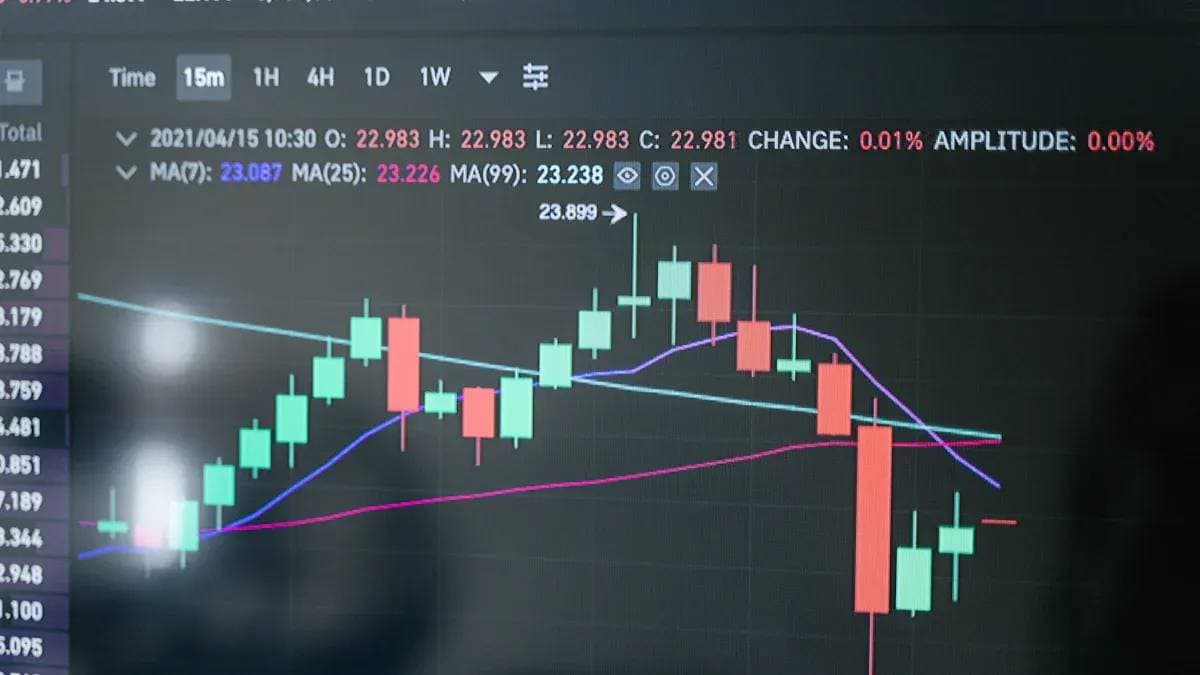
When you open any stock app, the red and green rise/fall curve you see is the most intuitive trend signal. But beyond that, you can learn some more advanced techniques:
- Observe Moving Averages: This is a common indicator reflecting price trends. Many investors watch the crossover of short-term lines (e.g., 1 month) and long-term lines (e.g., 3 months). When the short-term line breaks above the long-term line from below, it may signal the start of an uptrend; conversely, it may signal a downtrend.
- Identify Key Chart Patterns: Historical trends sometimes form classic patterns. For example, after a long decline, the index may form a “V” or “U” shaped reversal, usually a signal of the end of a downtrend. During rises, it may form a “bull flag”, indicating the uptrend may continue.
Although history does not simply repeat, through the CSI 300 Index, you can learn to recognize these market signals, adding a reference for your decisions. Historically, the A-share market saw obvious rises in 2006-2007, 2014-2015, and 2020-2021, followed by adjustments. Observing these cycles can help you understand market rhythm.
Measuring Personal Investment Performance
The CSI 300 Index is also a precise “ruler” for measuring your own investment performance. Many investors often wonder: I made 10% this year—is that good or bad? At this point, you need a benchmark for comparison.
1. Calculate Your Investment Return
First, you need to know how to calculate your portfolio’s return. A simple method is calculating holding period return.
Formula: Return = (Ending Value - Beginning Value + Period Income) / Beginning Value
Example: Suppose you invested 10,000 CNY at the beginning of the year, ending assets grew to 11,500 CNY, and you received 200 CNY in dividends during the period. Then your annual return is: (11,500 - 10,000 + 200) / 10,000 = 17%.
2. Compare with the CSI 300 Index
After calculating your return, compare it with the CSI 300 Index’s rise/fall over the same period. If your return exceeds the index, congratulations—your investment strategy has “outperformed” the market average!
Below is the CSI 300 Index’s annual performance in recent years for reference:
| Year | Percentage Change |
|---|---|
| 2021 | -5.20% |
| 2022 | -21.63% |
| 2023 | -11.38% |
Note: When comparing, ensure your portfolio has some comparability with the index. The CSI 300 Index leans toward finance and consumption large-caps. If your holdings are mainly small-cap or tech stocks, direct comparison may have limited meaning. But regardless, it is an important reference for measuring your investment ability.
Getting Started with Index Fund Investing
For many beginners, picking individual stocks is difficult and risky. At this point, the CSI 300 Index provides a “one-click package” investment shortcut—investing in index funds.
You cannot directly buy the “CSI 300 Index” itself, but you can buy funds that track this index. Index funds aim to replicate the index’s performance—buying one is equivalent to proportionally buying all 300 companies in the CSI 300. This is a very suitable entry method for investors seeking long-term stable returns or with lower risk tolerance.
How to Start Investing in CSI 300 Index Funds?
The process of investing in index funds is very simple—you can easily complete it through major broker platforms:
- Clarify Investment Goals: First think clearly what your investment is for, such as retirement savings or children’s education funds.
- Choose a Broker Platform: Select a reputable broker with low trading fees and user-friendly interface to open an account.
- Research and Choose Funds: There are many index funds tracking the CSI 300 on the market, such as Huaxia CSI 300 ETF (large asset management scale). You can focus on their expense ratios, tracking errors, etc., and choose the product that best suits you.
- Start Investing: You can buy in a lump sum or use dollar-cost averaging. The latter can help you average costs and reduce the impact of market volatility.
- Regular Review: Investing is not a one-time effort. You need to regularly check your portfolio to ensure it aligns with your long-term goals.
Risk Warning
Investing in any financial product carries risk. Although CSI Index funds diversify individual stock risk, they still face the market’s systemic risk, such as:
- Price Volatility Risk: When the overall market falls, fund net value will also decline.
- Country and Policy Risk: Changes in macroeconomy, monetary policy, or international relations may impact the market.
- Tracking Error Risk: Due to creations/redemptions, component adjustments, etc., fund performance may have slight differences from the index itself.
Before making investment decisions, be sure to fully understand the related risks.
Now you have mastered the core knowledge of the CSI 300 Index. For you, it has at least three core values:
- A Window: Helps you quickly understand overall market conditions.
- A Ruler: Used to measure your own investment performance.
- A Shortcut: Easily enter investing through index funds.
Understanding the CSI 300 Index is a key step on your investment journey from beginner to advanced. We hope you apply what you learned today in practice and start paying attention to this important market indicator.
FAQ
What is the difference between the CSI 300 Index and the Shanghai Composite Index?
They are two different indices. The CSI 300 Index selects 300 companies from both Shanghai and Shenzhen markets. The Shanghai Composite Index includes all stocks on the Shanghai Stock Exchange. You can think of the CSI 300 as the “top class” and the Shanghai Composite as the “whole school” performance.
How often are the CSI 300 Index components adjusted?
The CSI 300 Index components are usually reviewed and adjusted every six months. This dynamic adjustment mechanism removes companies that no longer meet standards and adds new high-quality companies to ensure the index always represents market leaders.
Can investing in CSI 300 index funds lose money?
Yes. Although index funds diversify individual stock risk, they still fluctuate with the overall market. When the mainland China A-share market falls overall, your fund net value will also decline, with the possibility of losing principal.
Can small amounts of capital invest in the CSI 300 Index?
Absolutely. By purchasing index funds tracking the CSI 300, you don’t need much money to participate. Many platforms support starting investments with as little as tens or hundreds of CNY, very suitable for beginners and small-amount investors to get started.
*This article is provided for general information purposes and does not constitute legal, tax or other professional advice from BiyaPay or its subsidiaries and its affiliates, and it is not intended as a substitute for obtaining advice from a financial advisor or any other professional.
We make no representations, warranties or warranties, express or implied, as to the accuracy, completeness or timeliness of the contents of this publication.
Related Blogs of
Annual Review: Best Performing US Stock ETFs in 2026 and the Logic Behind Them


US-China Trade War Enters New Phase: How the Tech Industry Can Respond to Supply Chain Impacts


Focusing on AI and Semiconductors: In-Depth Analysis of 10 Leading Future US Tech Stocks


US Stock Market Holiday Countdown: How Investors Should Position for Next Week's Trading

Choose Country or Region to Read Local Blog
 Australia
 Austria
 Belgium
 Canada
 Cyprus
 Czech Republic
 Denmark
 Estonia
 Finland
 France
 Germany
 Greece
 Hong Kong
 India
India Indonesia
 Ireland
 Italy
Italy Japan
Japan Latvia
 Lithuania
 Luxembourg
 Malaysia
 Malta
Malta Morocco
 Nepal
Nepal Netherlands
 New Zealand
 Norway
 Pakistan
 Philippines
 Poland
 Portugal
 Romania
 Singapore
 Slovakia
 Slovenia
 South Africa
 South Korea
 Spain
Spain Sweden
 Thailand
 The United States
 Turkey
 United Arab Emirates
 United Kingdom
 Vietnam
Contact Us




BIYA GLOBAL LLC is a licensed entity registered with the U.S. Securities and Exchange Commission (SEC No.: 802-127417); a certified member of the Financial Industry Regulatory Authority (FINRA) (Central Registration Depository CRD No.: 325027); regulated by the Financial Industry Regulatory Authority (FINRA) and the U.S. Securities and Exchange Commission (SEC).
BIYA GLOBAL LLC is registered with the Financial Crimes Enforcement Network (FinCEN), an agency under the U.S. Department of the Treasury, as a Money Services Business (MSB), with registration number 31000218637349, and regulated by the Financial Crimes Enforcement Network (FinCEN).
BIYA GLOBAL LIMITED is a registered Financial Service Provider (FSP) in New Zealand, with registration number FSP1007221, and is also a registered member of the Financial Services Complaints Limited (FSCL), an independent dispute resolution scheme in New Zealand.